 Reading time: 2 minutes

 Summary for: Heating on, still cold? Most Czechs say their homes leave them shivering
Czech households heat their homes to an average of 21 degrees Celsius, but more than half of residents still feel cold indoors at least occasionally, according to a new survey.
Women and younger adults report feeling cold most frequently. The findings also suggest that a home’s insulation makes a substantial difference to comfort, even when the thermostat setting tells only part of the story.

The November survey of 837 respondents was conducted by Ipsos for Sdružení EPS ČR, an industry association promoting expanded polystyrene insulation.
Who feels the cold most?
During freezing weather, 65 percent of households keep their living rooms between 20 and 22 degrees. One in five reports a temperature of 19 degrees or below.
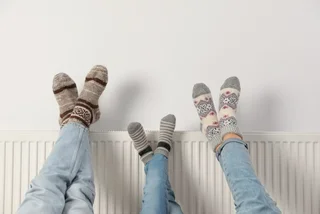
Bedrooms tend to be cooler: more than half of respondents sleep in rooms heated to no more than 19 degrees when outdoor temperatures fall below zero.
Despite those settings, 55 percent say they feel cold at home at least occasionally. Around one in nine experiences that discomfort frequently or constantly.
The gap between women and men is pronounced. Frequent or constant feelings of cold affect 16.5 percent of women, compared with 6.1 percent of men.
Age also makes a difference. Nearly one in five respondents aged 18–26 regularly feels cold at home, against 5.5 percent of those aged 54–65.
Younger respondents nevertheless reported sleeping in considerably warmer rooms than older people.
Prague households held off on heating
Around 64 percent of households switched on their heating in October, but Prague residents were the most likely to wait.

In the capital, 36 percent began heating only in November or had not yet started when the survey took place. Elsewhere, that proportion was roughly half as high.
The condition of the building was also associated with both comfort and the start of the heating season.
Among people living in comprehensively insulated homes, 47 percent reported feeling cold at least occasionally. In uninsulated properties, the figure reached 69 percent—a difference of 22 percentage points.
Households in insulated buildings also tended to start heating later.
Pavel Zemene, chairman of Sdružení EPS ČR, said indoor comfort depends on more than air temperature. The temperature of walls, windows and floors, along with drafts, can affect how warm a room feels.
“A thermometer tells only half the truth,” he said.
According to Zemene, well-insulated buildings retain heat and have warmer internal surfaces, helping occupants feel more comfortable at the same air temperature.
The association, established in 1998, supports the development and use of expanded polystyrene products and participates in standards and quality control.