



 Reading time: 3 minutes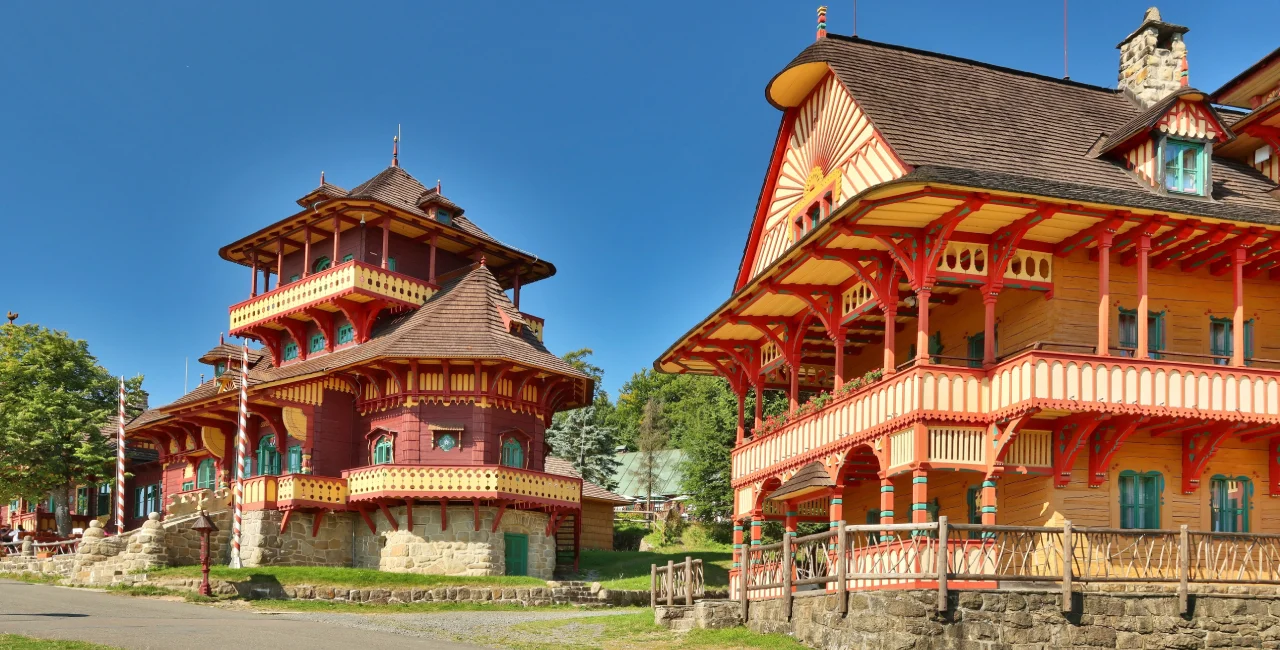

 Summary for: These rare Czech landmarks join Art Nouveau and wood to stunning effect
Aug. 23 marks the anniversary of the birth of Dušan Jurkovič, the Slovak architect whose distinctive buildings helped redefine the relationship between folk traditions and modern architecture in the Czech lands.
Born in 1868 in what is now Slovakia, Jurkovič spent an important part of his career in Moravia and Bohemia, producing buildings that combined colorful folk motifs, Art Nouveau influences and an inventive approach to wood.

He is sometimes remembered as the “poet of timber,” a fitting description for an architect whose mountain retreats, spa buildings and private homes remain among the most recognizable examples of early 20th-century architecture in Czechia.
To mark his birthday, here are five of Jurkovič's best-known works that can still be visited in Czechia:
Jurkovič House in Luhačovice
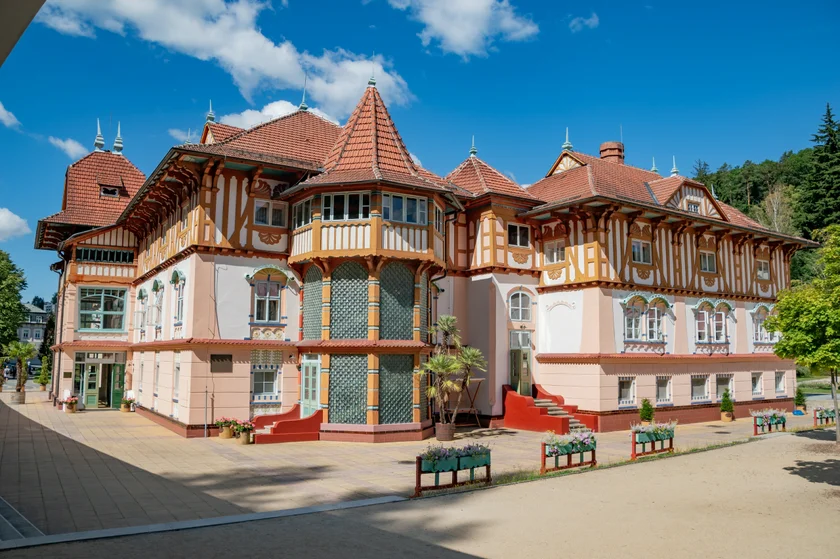
Jurkovič's influence is particularly visible in Luhačovice, where he designed and remodeled several buildings during the spa town's early 20th-century expansion.
The most famous is Jurkovič House, a former mill that he transformed into a spa building in 1902. Its colorful facade and combination of traditional Moravian elements with contemporary architectural ideas make it one of Luhačovice's defining landmarks.
Jurkovič also designed several other buildings in the spa complex, including Hotel Jestřabí and the Sun and River Baths. Together, they helped give Luhačovice much of the architectural character it retains today.

Pustevny: Libušín and Maměnka
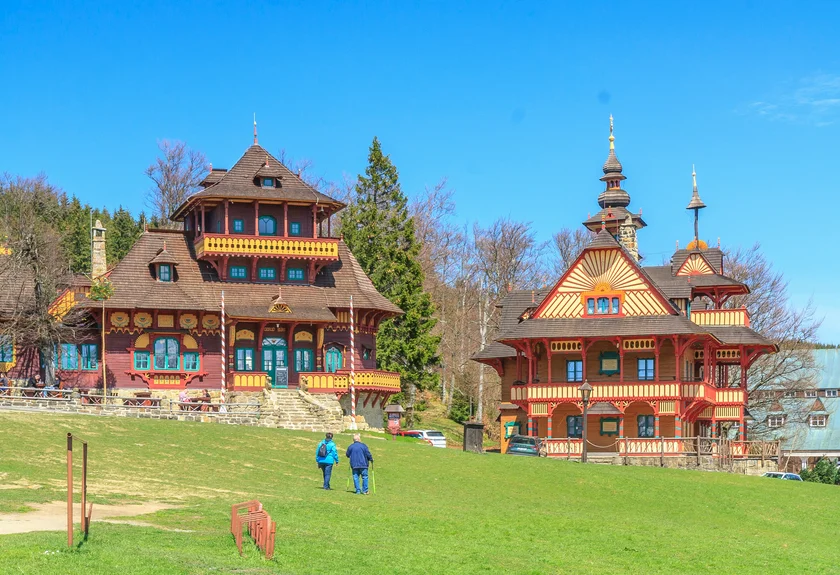
Perhaps no Jurkovič buildings are more immediately recognizable than the colorful wooden mountain retreats at Pustevny in the Beskids.
Jurkovič designed Libušín and Maměnka in the late 1890s, drawing heavily on the folk architecture of the Valašsko and Kysuce regions while incorporating elements of the Art Nouveau movement. Their elaborate wooden details, bright colors and decorative motifs helped establish the distinctive visual language that would become Jurkovič's signature.
Libušín was severely damaged by a fire in 2014 but reopened in 2020 following an extensive reconstruction. The two buildings remain among the most popular architectural destinations in the Beskids, close to the upper station of the Pustevny cable car.
Jurkovič's Villa, Brno
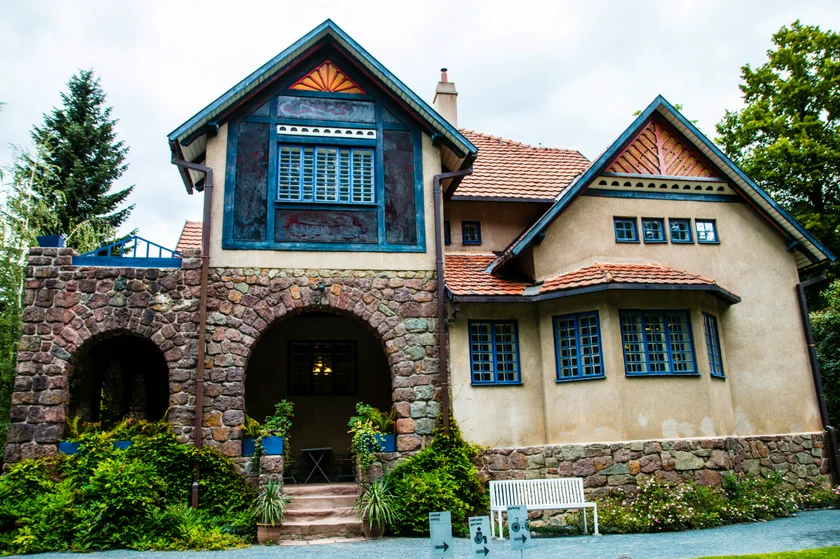
Jurkovič's work was not limited to mountain retreats and spas. In Brno's Žabovřesky district, he designed a home for himself that became one of his most important architectural statements.
Completed in 1906, Jurkovič's Villa combines folk-inspired decoration with the geometric forms of Viennese modernism and influences from the British Arts and Crafts movement. The result is less overtly rustic than his Pustevny buildings but unmistakably Jurkovič.
The villa is now part of the Moravian Gallery and is open to visitors, with exhibitions and events exploring its architecture and history.
Calvary (Stations of the Cross) on Svatý Hostýn
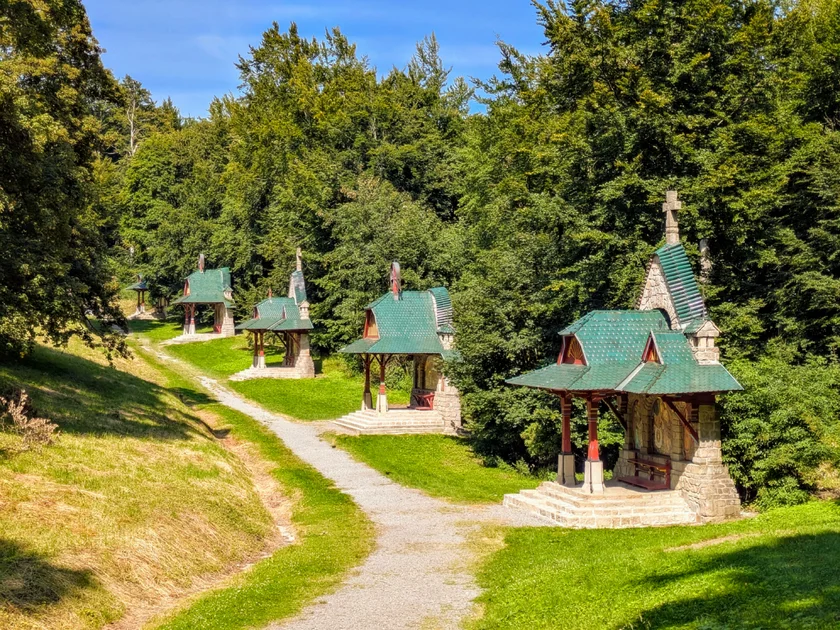
Jurkovič also brought his distinctive style to religious architecture at Hostýn, one of Moravia's best-known pilgrimage sites.
His Stations of the Cross consists of a series of chapels positioned below the summit of Hostýn. Rather than simply reproducing conventional religious architecture, Jurkovič incorporated colorful decorative elements and forms inspired by local traditions.

The result is an architectural landscape that blends into the wooded hillside while giving each individual station its own distinctive character.
Jurkovič Lookout Tower, Rožnov pod Radhoštěm
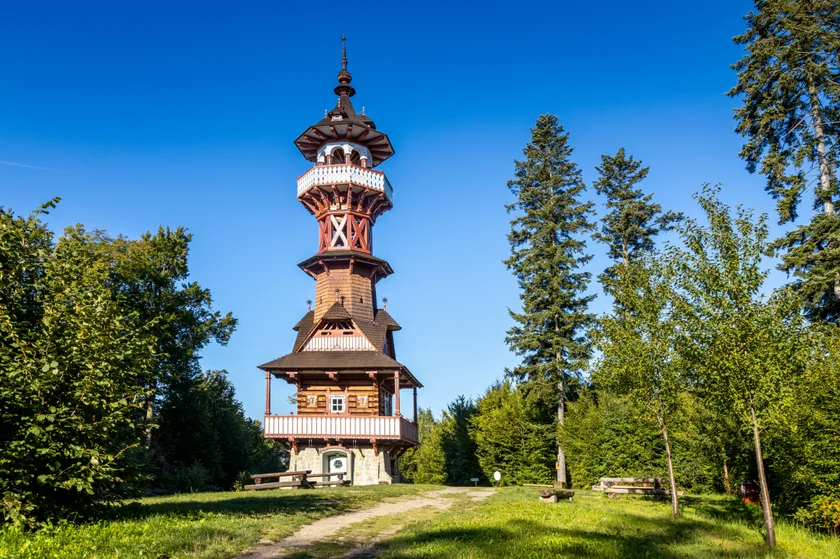
One of Jurkovič's more unusual Czech projects is the Jurkovič Lookout Tower on Karlův kopec above Rožnov pod Radhoštěm.
The tower was constructed according to Jurkovič's early 20th-century plans, creating a colorful wooden landmark overlooking the town and the surrounding Beskids. It stands near the Wallachian Open-Air Museum, making it an easy addition to a visit focused on the region's traditional architecture.
Unlike many of Jurkovič's original buildings, however, the lookout tower was not completed during his lifetime. It was finally built in 2012 based on his preserved designs.
An architectural legacy across Czechia
Jurkovič's Czech legacy extends beyond these five landmarks. His work can also be found at the Bartoňova útulna in Peklo near Nové Město nad Metují, the Jurkovič Bridge in the town's castle gardens, and a historic fruit-drying house in Frenštát pod Radhoštěm.
What connects these disparate projects is Jurkovič's ability to reinterpret local traditions rather than simply reproduce them. His buildings can look distinctly folk-inspired while simultaneously reflecting the architectural currents of his era.
More than 75 years after his death, that combination remains what makes Jurkovič's work so recognizable, and why his buildings continue to stand out across the Czech landscape. Discover more local landmarks from the iconic architect on the pages of Visit Czechia.