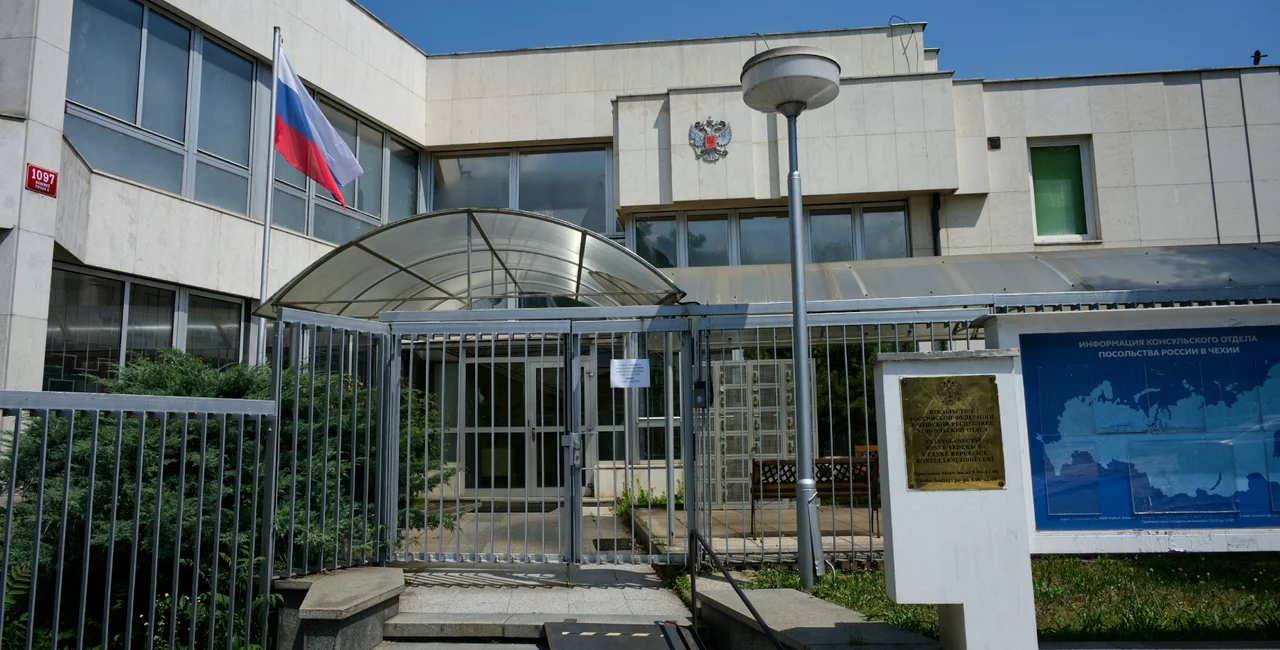
Around 1,000 Russian citizens cast ballots in the country's parliamentary elections at the Russian Embassy in Prague on Sunday, according to Russian state news agency TASS.
Voting at the embassy ran from 8 a.m. to 8 p.m., with Russian citizens required to present a valid passport but not to register in advance. TASS cited an election commission representative as saying voting proceeded without incidents.
Several dozen people arrived early in the morning, while a line of around 30 to 40 voters formed outside the embassy around midday. Russian political movement Vesna estimated that approximately 400 people had voted by 1 p.m.
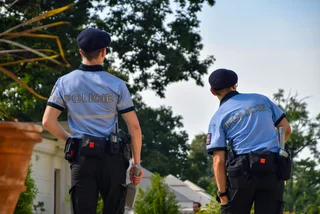
Police monitored the area throughout the day, with around 15 officers, including members of an anti-conflict team, deployed outside the embassy. Voters were required to leave personal belongings in lockers before entering the polling station.
Anti-war protest held outside embassy
Some Russian residents used the election to express opposition to President Vladimir Putin's government and Russia's war in Ukraine.
At around 1 p.m., a small demonstration was held outside the embassy. Organizers displayed a banner reading in Russian, "The elections will end, but the war will not," while a Ukrainian flag was also displayed.
One voter, identified by ČTK as Dmitry, said he had moved to Prague from Voronezh following Russia's full-scale invasion of Ukraine in February 2022.
He said he joined other Russians who came to vote around noon following calls from opposition figures in exile. Dmitry ultimately voted for the Communist Party despite disagreeing with its platform, describing his vote as a tactical choice against the ruling party.
Russia held voting over three days from Friday through Sunday to elect all 450 members of the State Duma. The ruling United Russia party, which dominates Russian politics and supports Putin's war in Ukraine, was widely expected to retain control of parliament.
The election took place in a tightly controlled political environment in which independent anti-war candidates have faced significant restrictions. Russia's liberal Yabloko party was excluded from the nationwide party-list ballot, although some of its candidates remained in individual constituency races.
This year's parliamentary election was Russia's first since its full-scale invasion of Ukraine. Voting was also organized in Russian-occupied Ukrainian territories that Moscow claims to have annexed, a move rejected as illegal by Ukraine and Western governments.