



 Reading time: 3 minutes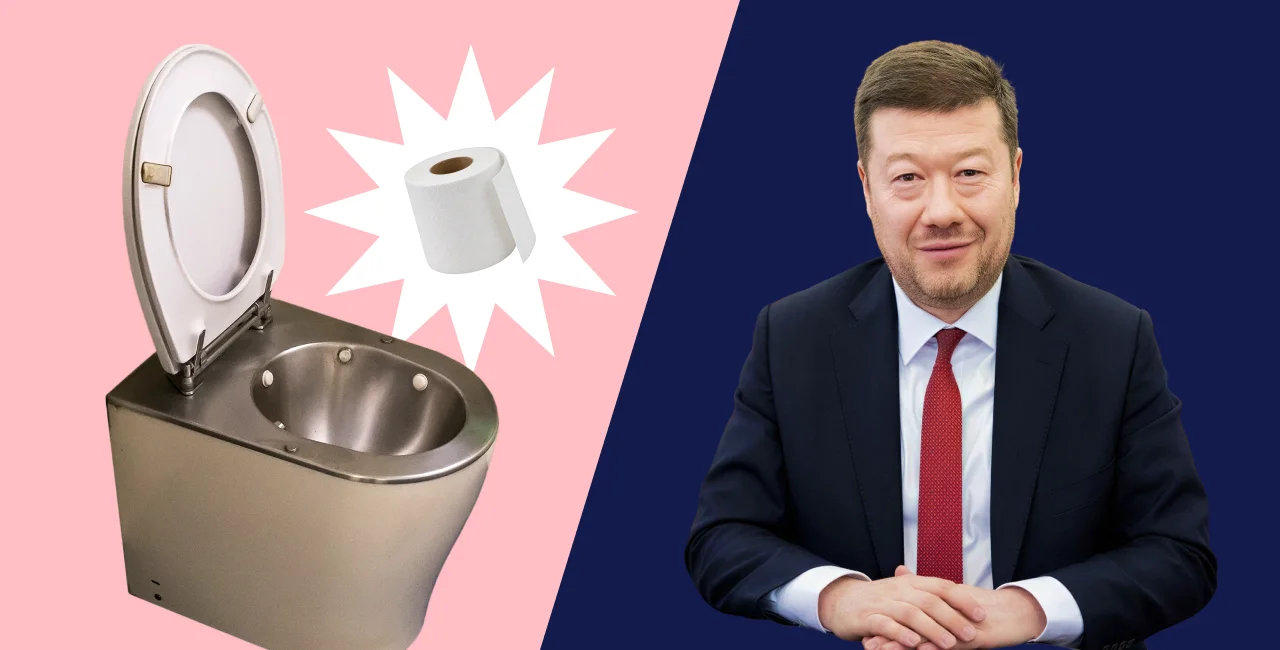

 Summary for: EXPLAINED: What a toilet-paper fight tells us about Czech politics today
There are many things currently demanding the attention of Czech politicians: the budget, defense spending, the Building Act, among them.
But for Lower House Speaker Tomio Okamura, the urgent matter this week was somewhat cheekier: an alleged shortage of toilet paper on Czech Railways trains.
Meanwhile, the future of the railway CEO, whose last name is Krapinec, hangs in the balance. The comments are (loo) rolling in, as Okamura demands that his party's Transport Minister Ivan Bednárik do something about it.
The complaints, he said, had repeatedly come from voters, particularly passengers traveling between Ostrava and Prague.
“I asked our Minister Bednárik to provide toilet paper on Czech Railways' express trains,” Okamura said, calling the situation a “complete disgrace.”
Czech Railways clapped back at Okamura, saying it has 3 million rolls of toilet paper in circulation annually and has not seen an increase in complaints about missing hygiene supplies.
The railway operator runs around 6,500 trains a day, it said, making the occasional empty dispenser possible even if the company’s toilet-paper infrastructure is not, as Okamura suggests, on the verge of collapse.
Czech Railways said cleanliness ratings from more than 200,000 passengers have actually improved since 2022, reaching an average of 4.25 out of 5.
Okamura is still not letting the matter go, and analysts say his interest in the state railway company may extend beyond bathroom supplies.

A two-ply plot
Okamura has also sharply criticized Czech Railways CEO the aforementioned Michal Krapinec, whose position has recently come under scrutiny for reasons having more to do with security clearances than WC drama.
Krapinec recently returned his, saying he did not need it to perform his job. Transport Minister Bednárik, who previously headed Czech Railways, has called the move unusual and said the company's supervisory board must consider the matter.
The timing has fueled speculation in the railway industry that Krapinec's tenure could be coming to an end, although the reasons for a possible change remain unclear. Czech Railways has recently won a major Prague and Central Bohemian Region contract and recorded strong passenger growth.
Asked whether he wanted Krapinec removed, Okamura gave a suitably mysterious answer: “The situation will have a certain development.”
Well-timed distraction or needed intervention?
Commentator Petr Honzejk of Hospodářské noviny sees something larger in Okamura's intervention.

SPD is polling at around 7 percent, well below the double-digit support Okamura would like, while some of the party's major ambitions, including its long-standing calls for referendums on EU and NATO membership, have failed to make it into the government's agenda.
Its ministers have also struggled to make much of a political mark.
That leaves Okamura with the familiar political problem, writes Honzejk, of how to demonstrate to voters that his party is actually doing something.
And nothing says “we are listening to ordinary people” quite like personally sorting out their toilet paper supply.
Honzejk compares the strategy to Prime Minister Andrej Babiš's famously hands-on approach to government, in which the prime minister has presented himself as the man who personally calls around Europe when medicines are scarce, sources vaccines or intervenes in whatever problem has landed on his desk.

From the strongman playbook?
Honzejk also draws a provocative parallel with Vladimir Putin, who has made a political art form out of personally “solving” the everyday problems brought to him by ordinary Russians, from broken infrastructure to water shortages in remote Siberian villages.
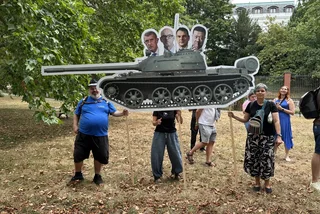
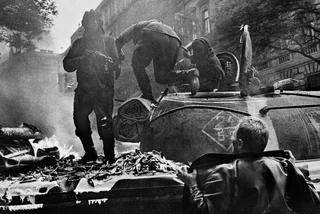
And the comparison is particularly striking this week, as Czechia marks the 58th anniversary of the Soviet-led invasion of Czechoslovakia. The invasion began overnight on Aug. 20–21, 1968, when Warsaw Pact troops led by the Soviet army entered Czechoslovakia to crush the Prague Spring reforms.
Okamura's version is considerably less dramatic: no tanks, just a battle with Krapinec over train toilets which started as a hygiene complaint, has become something much bigger.
By Tuesday, the fight had expanded to include the railway CEO's future. By Thursday, it had become a national political spectacle, with even the German press taking notice.
And on Friday, Okamura was booed at the Czech Radio ceremony marking the 58th anniversary of the invasion, a fitting end to a week in which his own heroics went somewhat down the drain.