



 Reading time: 4 minutes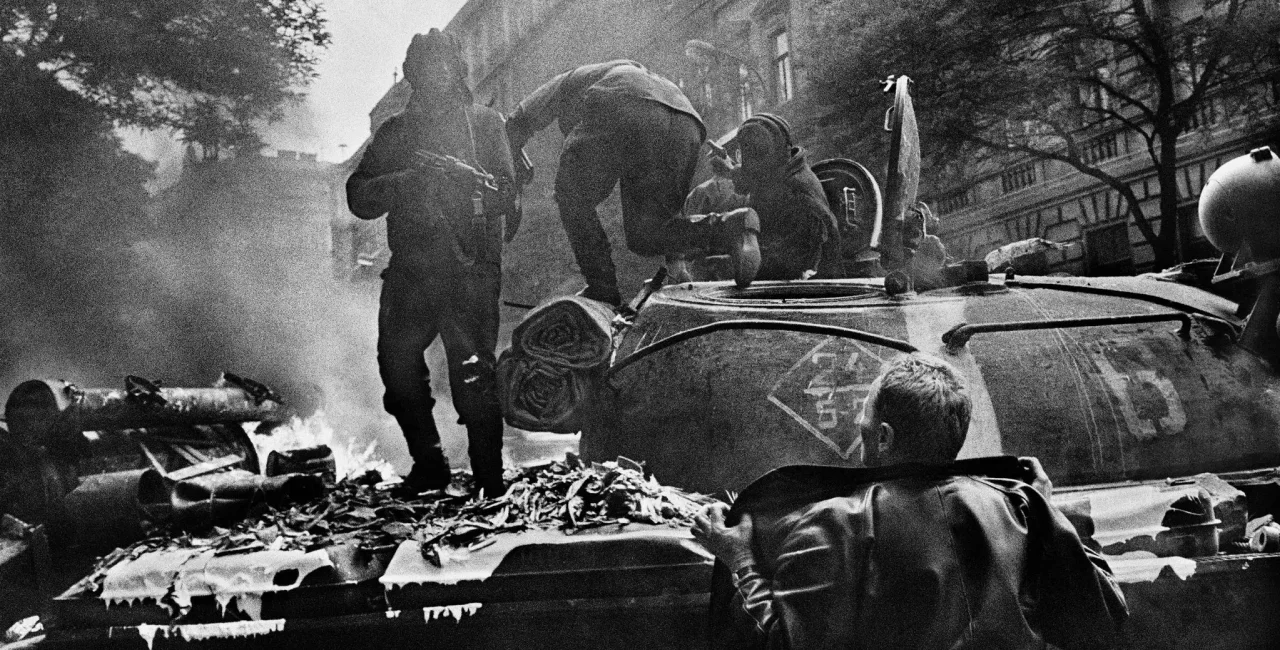

 Summary for: Prague remembers 1968: ‘We can lose our freedom faster than we think’
Prague will mark 58 years since the Soviet-led invasion of Czechoslovakia this week, with events looking not only at the night the tanks arrived, but at what happened to Czech society afterward – including censorship, political repression and the mass emigration that followed.
The invasion began overnight on Aug. 20–21, 1968, when Soviet, Polish, Hungarian and Bulgarian troops entered Czechoslovakia in an operation involving roughly a quarter-million soldiers.
The country's army was ordered not to resist, but civilians took to the streets, confronting tanks, removing street signs, and attempting to persuade soldiers that they had been misled about the situation.
At least 100 people were killed during the invasion and its immediate aftermath. Historical research puts the number of Czechoslovak victims through the end of 1968 at 137, with around 500 seriously injured.
What was the Prague Spring?
The invasion brought an abrupt end to the Prague Spring, a period of political and cultural liberalization that began after Alexander Dubček became Communist Party leader in January 1968.
Censorship was relaxed and then abolished, newspapers and broadcasters gained unprecedented freedom, and Dubček's reforms sought to create “socialism with a human face” without abandoning communism or Czechoslovakia's alliance with Moscow.
Soviet leaders feared the reforms could spread across the Eastern Bloc and intervened militarily.
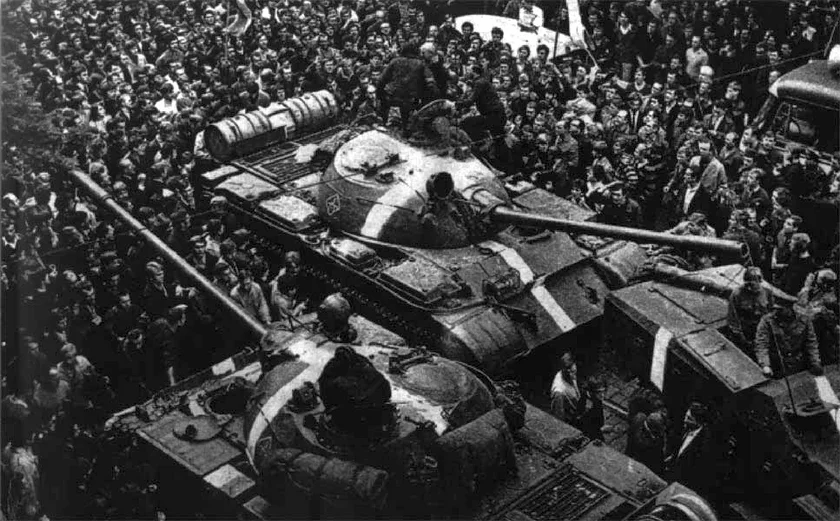

Resistance continued after the invasion, with crowds gathering and journalists keeping Czechoslovak Radio on the air despite the occupation. But Soviet pressure eventually forced the reforms to be dismantled. Dubček was replaced by Gustáv Husák in April 1969, ushering in two decades of repression known as “normalization.”
Censorship returned, reformers and politically unreliable people lost their jobs, and travel and cultural life were restricted. The Soviet military presence remained for more than two decades, and hundreds of thousands of Czechoslovaks eventually left the country.
A generation that left
This year's NeverMore 68 festival focuses on that less visible legacy of the invasion.
Held at Prague's Výstaviště on Friday, Aug. 21, the festival's theme is “Stories of those who were missing here,” looking at the hundreds of thousands of Czechoslovaks who went into exile after 1968 and the effect their departure had on Czech and Slovak society.
The organizers point out that the people who left included doctors, teachers, scientists, artists, journalists and other professionals whose absence affected the country's culture, education and public life for decades.

Barbora Šubrtová, founder of NeverMore 68, says the festival was partly created because the events of 1968 are becoming increasingly distant for younger generations.
She also sees a direct connection between historical memory and the present.
“The feeling that ‘this can't happen today’ is one of the reasons society can become less alert to similar threats. And if 1968 reminds us of anything, it is that we can lose our freedom much faster than we are willing to admit.”
Tomáš Hübl, chairman of the Prague Exhibition Grounds board, similarly describes this year's focus on those who left as a reminder of “the consequences of the loss of freedom and education.”
what the world heard in 1968
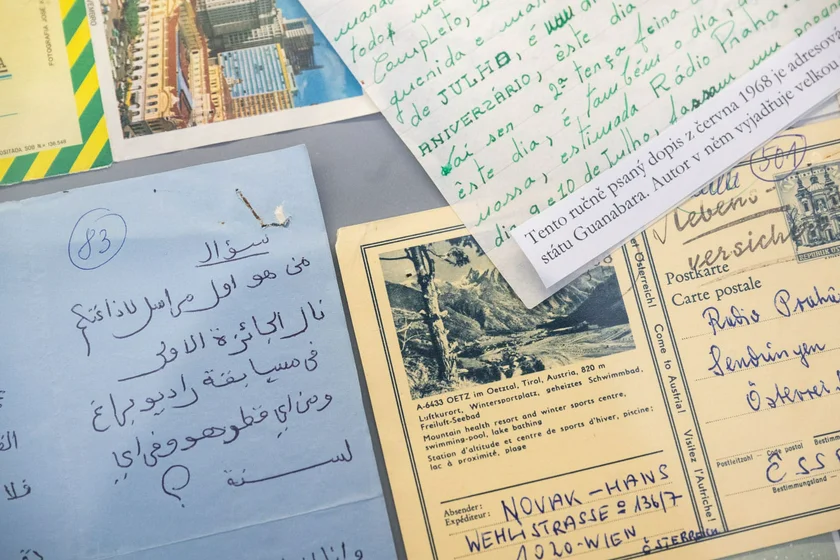

Czech Radio is displaying letters sent from around the world during the Prague Spring and the Soviet-led invasion.
The free exhibition “When the World Was Tuning In to Prague” at Czech Radio’s Vinohradská headquarters brings together correspondence preserved in the radio’s archive and puts an international perspective on the events of 1968.
As censorship eased and was abolished in June 1968, Radio Prague, the predecessor of today’s Radio Prague International, became an important source of information about the rapidly changing country. Thousands of listeners from abroad wrote to the station in response to its broadcasts, the political upheaval, and everyday life in Czechoslovakia.
The letters also reveal what happened after the invasion. During the subsequent period of normalization, the communist leadership scrutinized the correspondence received by foreign-language broadcasters. Personnel purges followed in 1971, forcing prominent radio employees who had opposed the occupation to leave.
The letters were preserved in the Czech Radio archive and are now being shown publicly for the first time. The exhibition runs through the end of October and is free to visit.
A generation that left
The legacy of 1968 can be seen in the careers and lives of the hundreds of thousands of Czechoslovaks who left the country after the invasion.
The organizers point out that the people who left included doctors, teachers, scientists, artists, journalists, and other professionals whose absence affected the country's culture, education, and public life for decades.
This year's commemorations pay tribute to that generation, among them filmmaker Miloš Forman, whose career continued abroad after the political climate in Czechoslovakia changed.
The evening program includes a screening of Miloš Forman's Taking Off, making the film particularly relevant to this year's theme.

Forman was one of the leading figures of the Czech New Wave, the generation of filmmakers whose work flourished during the cultural liberalization of the 1960s. After leaving Czechoslovakia, he made Taking Off in the United States, his first American feature.
The 1971 film is a comedy about a New York teenager who runs away from home and the parents who become immersed in the city's counterculture while trying to find her.
NeverMore will also premiere National Constellation, a new 50-minute documentary exploring how the 1968 invasion still resonates across generations. The film brings 100 people together in a social experiment, taking on roles including Dubček, Jan Palach, Communist leaders, and Warsaw Pact troops to explore themes of courage, betrayal, and trust.
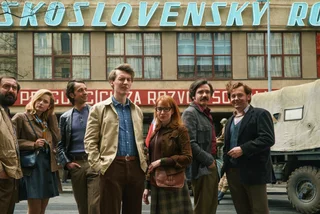
The event runs from 2 p.m. to 11:30 p.m. at Výstaviště on Aug. 21, with free admission. Visitors can explore exhibitions about exile and political repression, an interactive Maps of Occupation installation showing how the invasion unfolded, and a Mosaic of Stories focused on the personal experiences of people who emigrated.
The festival also provides an unusual opportunity to see a real T-55 tank that was part of the occupying forces in 1968, displayed as part of the A Gift for Putin program.

The evening closes with Forman's Taking Off.