Good morning and happy Sunday. Here’s your Sunday Morning Mix, bringing you the key stories from across Czechia.
This morning’s news is led by a STEM poll showing that around 62 percent of Czechs believe the United States under Donald Trump is weakening NATO’s defense capabilities, with the view shared across most major political voter groups. In other developments, Prime Minister Andrej Babiš says kratom will not be banned immediately despite concerns over regulation, and economists expect Czech wages to have continued rising in the first quarter.
This morning's top story
Most Czechs say Trump weakens NATO
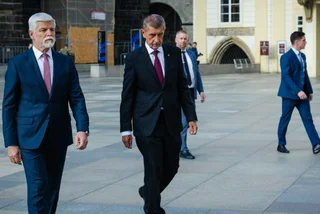
Nearly two-thirds of Czechs believe U.S. policy under President Donald Trump is weakening NATO’s ability to defend its members, according to an April survey by the STEM agency. Just 7 percent of respondents said current U.S. actions strengthen the alliance, while skepticism was widespread across supporters of both governing and opposition parties.
View shared across politics: The view was shared by majorities of voters from ANO, SPD, Motorists, STAN, Pirates, and the Together coalition. The survey also found that Czechs consider Russia’s war in Ukraine the biggest security threat facing the country, ahead of the conflict involving Iran.
More top headlines now
Babiš rules out immediate kratom ban
Prime Minister Andrej Babiš said Czechia will not immediately ban kratom, despite concerns that current regulations are failing to prevent underage access. The government instead plans to strengthen enforcement and consider tighter restrictions on the sale of the stimulant and sedative substance.
Potential changes: Officials are considering raising the minimum purchase age from 18 to 21, increasing fees, and imposing stricter rules on licensed retailers. Babiš said inspections will be expanded after reports that kratom continues to be sold online and in unlicensed shops despite regulations limiting sales to adults.
Czech wage growth continues in Q1
Wages in Czechia continued to rise in the first quarter of 2026, according to estimates by economists cited by Czech News Agency, with nominal growth expected to remain above 6–7 percent. Analysts say the average salary likely stayed above CZK 50,000 despite a slight slowdown from the end of last year.
Inflation looms: Real wages also increased due to low inflation, with estimates suggesting growth of around 5 percent. Economists warn, however, that strong wage growth may continue to fuel inflationary pressure and keep interest rates higher for longer.
Kidney disease affects 1 in 10 Czechs
Around one in 10 people in Czechia has kidney disease, according to estimates cited by the Occupational Health Insurance Company. Specialists say the number of patients is rising, including those requiring dialysis or transplants, while many people remain unaware of the condition because symptoms often appear only in later stages.
Rising concern: Doctors warn chronic kidney disease could become the world’s fifth-leading cause of death by 2040, driven by aging populations and conditions such as diabetes, obesity, and high blood pressure. Since January, kidney function screening has been offered every two years to all adults over 50 and younger high-risk patients.
WWII US veterans speak in Prague
Two American World War II veterans, 105-year-old Arnold Strauch and 100-year-old Harry Humason, met the public in Prague on Saturday, sharing their wartime experiences during a discussion event held at Žižkov Town Hall. The visit included a convoy of historic military vehicles and drew attendees from across Czechia.
What they shared: The veterans described combat in Europe and the Pacific, including the liberation of parts of former Czechoslovakia. The event was organized by historian Jiří Klůc, who translated the discussion and coordinated the accompanying public program.
Daily poll: Czech view on NATO
We already have the afternoon news update available.
Read it here
Want to see more from us? Select Expats.cz as a
preferred source on Google.





 Reading time: 3 minutes

 Summary for: Czech news in brief for May 31: Sunday's top morning headlines
 Most Czechs say Trump weakens NATO

 Spanish
 English
Prague • CZK 70,000
English
Prague • CZK 70,000 German
 French
 Italian
Remote work - Czechia • CZK 180
Italian
Remote work - Czechia • CZK 180