


 Reading time: 2 minutes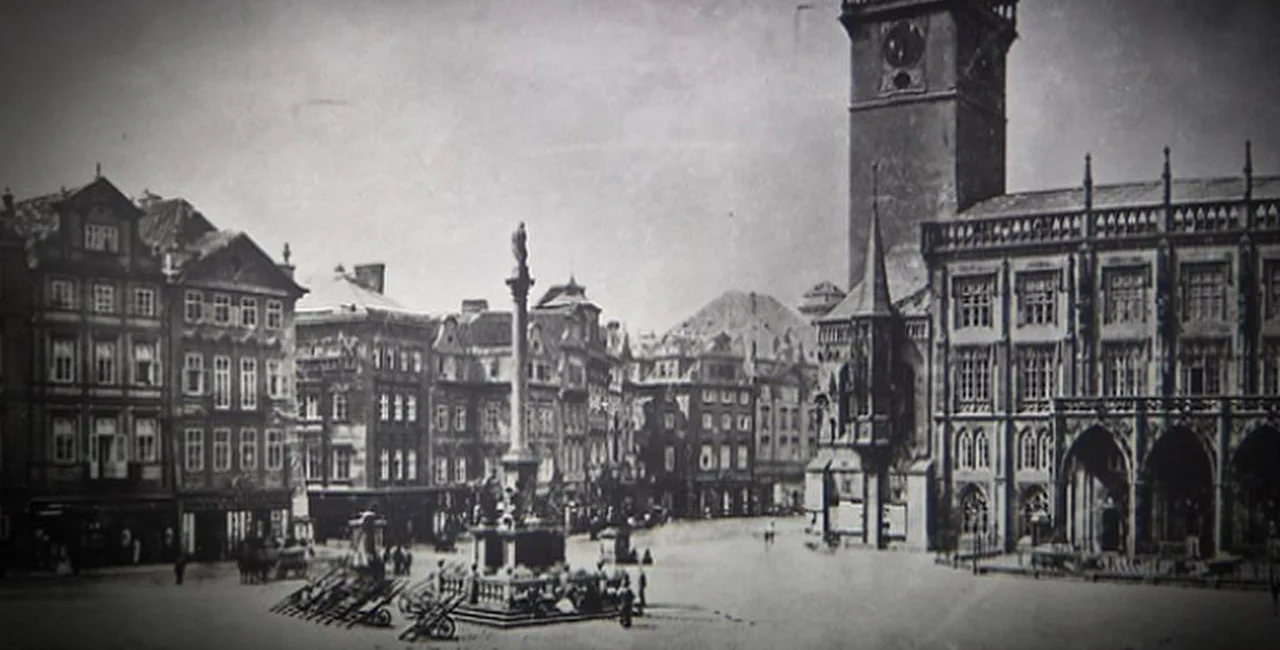

 Summary for: Controversial monument is at long last being placed on Old Town Square
A controversial monument is being raised in the center of Prague this week after being at the center of debate for decades.
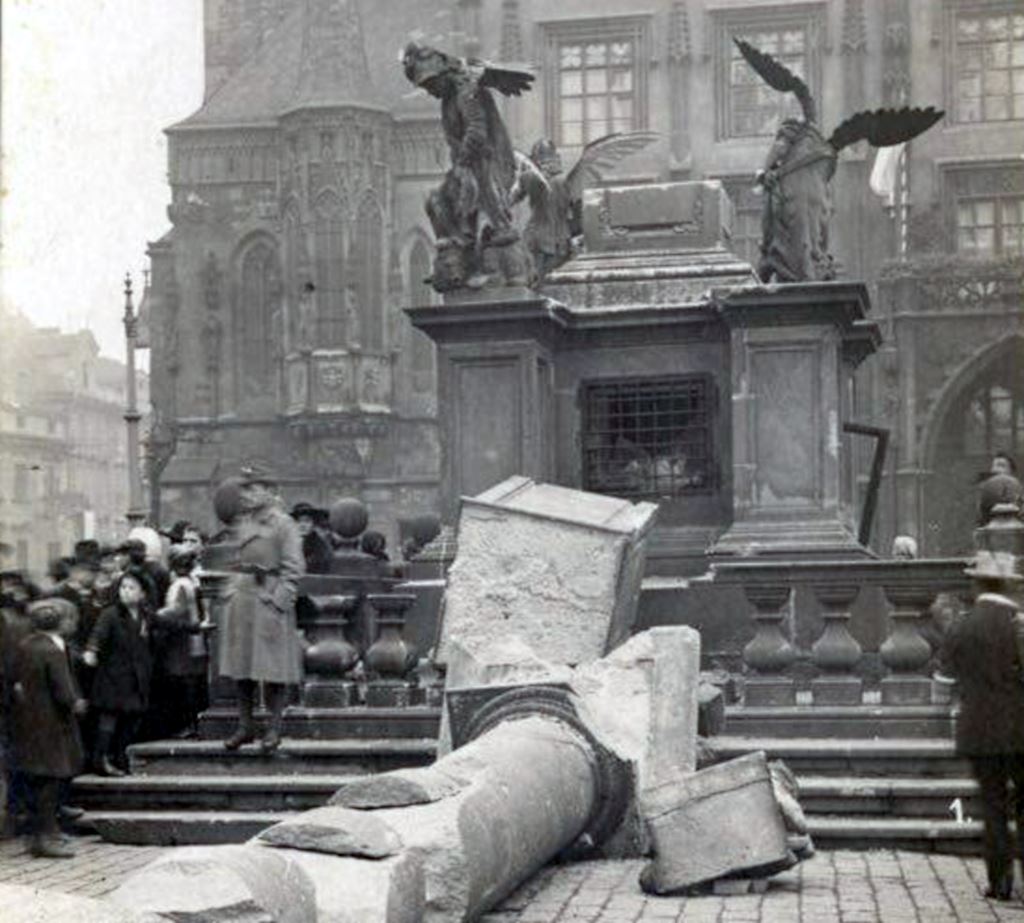
A replica of the Marian column from the 17th century will be erected in Old Town Square in the center of Prague Thursday morning.
The column was meant to commemorate Prague being rescued from Swedish invaders at the end of the Thirty Years’ War in 1648. Proponents of the restoration consider it an important work of art. Opponents claim it marks the start of Habsburg occupation and Catholic domination of Bohemia, and intolerant re-Catholicization of the country.
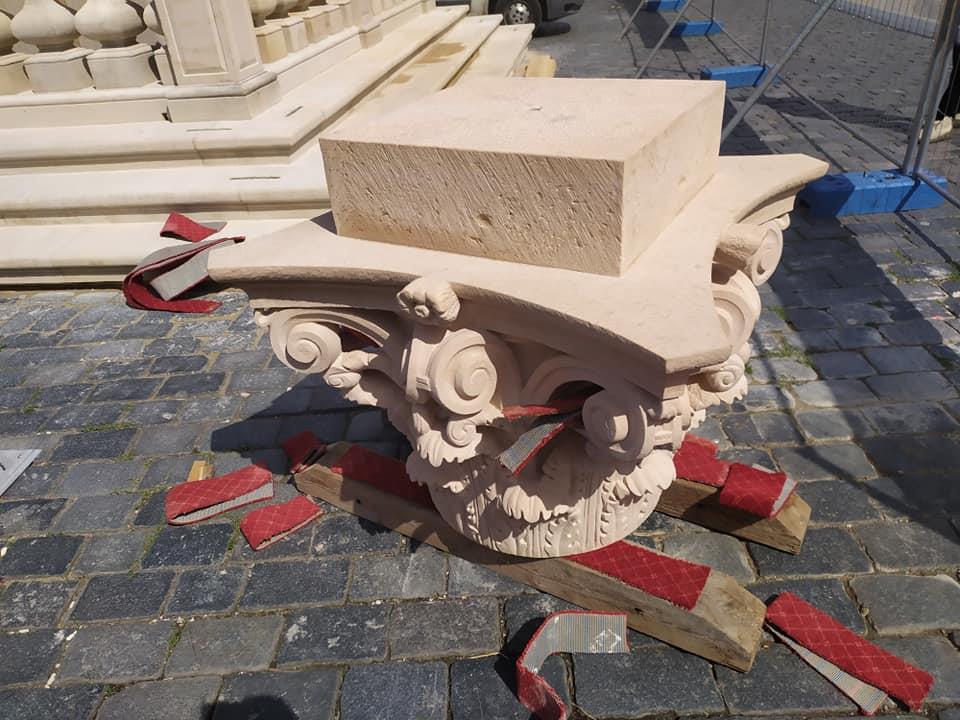
The 16-meter sandstone column will be topped with a sculpture of St Mary surrounded by golden stars. That piece is currently displayed on a metal pillar next to the Church of Our Lady before Týn, just beyond the square.
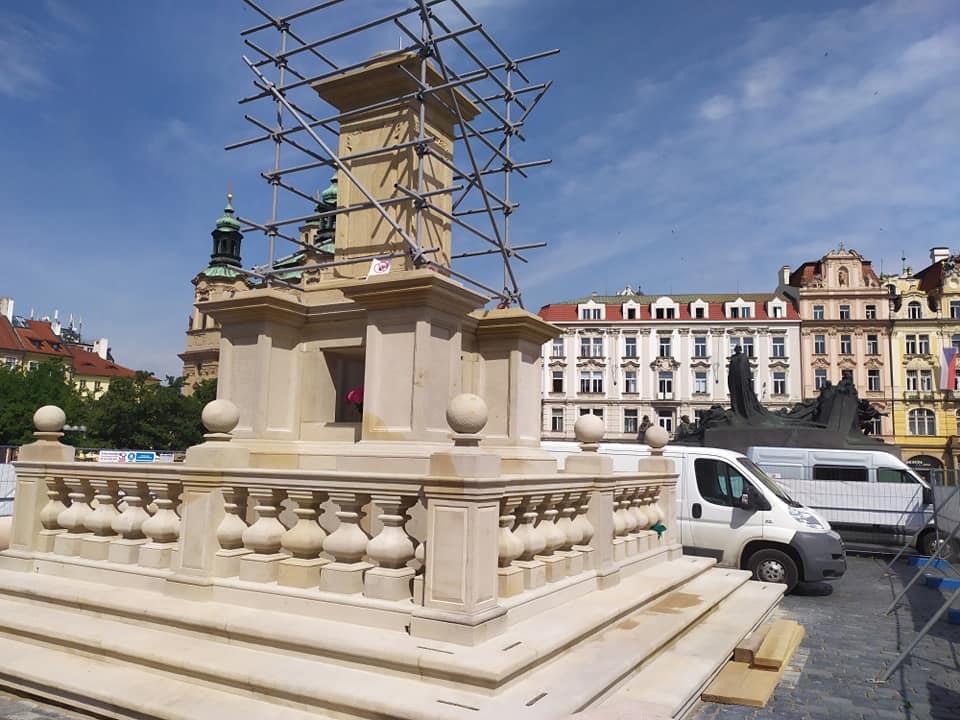
The column also includes four angels fighting evil, a balustrade, and stone steps.
The restoration of the column was supported by 34 out of 65 members of the Prague Assembly.
The white stone Catholic statue would stand a few meters away from a bronze statue of religious reformer Jan Hus designed by Ladislav Šaloun, built in 1915. The two monuments stood side by side for three years.

Arguments against the re-installation of a column were also raised by atheists and representatives of Protestant churches. The Czech Republic has one of the highest atheist populations in the world.
Sculptor Jan Jiří Bendl is considered the main creator of the original monuments’ sculptural decoration. It functioned as a sundial since at noon the column’s shadow crossed the Prague meridian.
The dispute over restoring the column has been going on since the 1990s. Permission to place the replica was granted in 2013. Prague’s then-mayor Bohuslav Svoboda (ODS) said that the Catholic statue of Mary next to the Protestant statue of Jan Hus in Old Town Square would show Prague was a multicultural city.
The replica was made without funds from the city, and the installation will be paid for with private funds. The broken fragments of the original are owned by the National Museum and stored in the Lapidarium at Holešovice.