



 Reading time: 4 minutes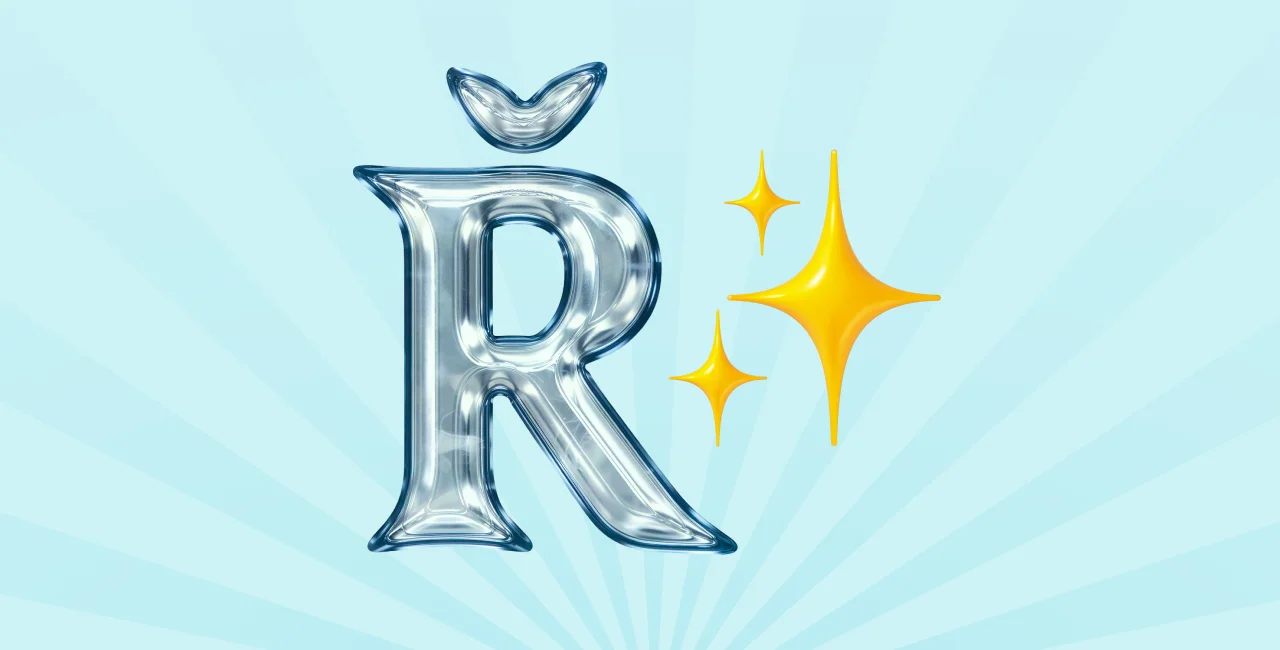

 Summary for: Why Czech is so hard: The language challenges foreigners struggle with most
For anyone learning Czech, there is one sound that seems to have acquired almost mythical status: ř.
But while the notoriously difficult sound may be the most recognizable symbol of the Czech language, it is not necessarily the biggest obstacle for foreigners learning to speak (or even sing) it.
The more serious challenge lies in the structure of Czech itself. Words change depending on their role in a sentence; adjectives and pronouns have to change with them, and Czech verbs can indicate whether an action is ongoing or completed.
For many learners, the toughest part of mastering Czech isn't just how the words sound, but that they keep shape-shifting.
The real challenge: Czech cases
But according to Barbora Štindlová, a bohemist and deputy director for studies at Charles University's Institute of Language and Vocational Training, the Czech ř is more of a curiosity than the central difficulty.
The bigger problem is Czech grammar – particularly its system of cases.
Czech uses a case system that changes the form of nouns depending on their role in a sentence. If you have children in Czech school, you may already be familiar with the seven pády – and the famous questions they learn to identify them.
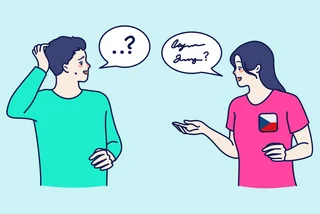

That means learning a Czech noun isn't necessarily a matter of memorizing just one word. Learners have to get used to seeing that word change, along with the adjectives and pronouns associated with it.
Štindlová told Czech Television that the complicated case system causes some of the greatest difficulties for foreign learners.
For English speakers, this can be particularly unfamiliar. English relies much more heavily on word order and relatively fixed word forms, while Czech can signal grammatical relationships through endings.
The result is a language in which the same basic word can look quite different from one sentence to the next.
Czech verbs have another trick
Czech also has verb aspect, which requires learners to distinguish between an action that is ongoing and one that has been completed.
The difference can be seen in pairs such as péct and upéct – roughly, to bake and to finish baking something.

For learners whose native language does not make the same distinction in its verbs, it's one more layer of information that Czech expects speakers to build into the verb itself.
Understanding Czech can come before speaking it
There is also a frustrating stage of language learning when you can understand considerably more Czech than you can actually produce.
According to experts, that's not unusual. Language learning distinguishes between receptive skills, such as listening and reading, and productive skills, such as speaking and writing. Learners can develop an understanding of new language before they are able to use it confidently themselves.
For Czech learners, that gap can be especially noticeable in everyday life. You may recognize words on a menu, understand the general idea of a conversation, or follow what is happening on Czech television, while still struggling to put together your own sentence quickly at the post office.
Don't let the grammar scare you away
But that doesn't necessarily mean you aren't making progress. This is where Czech teachers say learners can sometimes get in their own way.

Kateřina Malečková, a Czech language and literature lecturer in Dijon, told ČT24 that she tries not to frighten students with grammar. Someone who has only studied Czech for a few semesters does not necessarily need to get every ending perfect.
A Czech speaker will generally understand someone who uses the wrong case, she said. The more important thing is not being afraid to speak.
Malečková says the first Czech lesson should already give students something practical to use: introducing themselves, saying hello, thanking someone, asking for something and perhaps counting to three. She favors simple, playful beginnings rather than overwhelming students with grammar.
Some Czech words really are hard to say
Malečková says her French students in particular struggle with Czech words containing clusters of consonants. One example is trh – “market” – while zmrzlina, or ice cream, is another favorite source of amusement.
For students who come from languages with fewer consonant clusters, Czech can sometimes feel as though it is asking them to pronounce several sounds at once.
–Czech tongue twisterStrč prst skrz krk.

So why bother learning Czech?
Some need it for work, study or everyday life in Czechia. Others learn it because of a Czech partner or family connection, or because they want to reconnect with Czech roots.
And then there are the people who simply want access to Czech culture.

Štindlová told ČT24 that some learners want to read The Good Soldier Švejk in the original, watch Czech films or understand Czech opera.
Malečková also uses films in her teaching, including Czech New Wave movies and Pelíšky, to help students understand not just the language but Czech humor and cultural references.
Both agree that you don't need perfect pronunciation, flawless endings, or complete mastery of every grammatical rule to start becoming part of the country around you.