



 Reading time: 3 minutes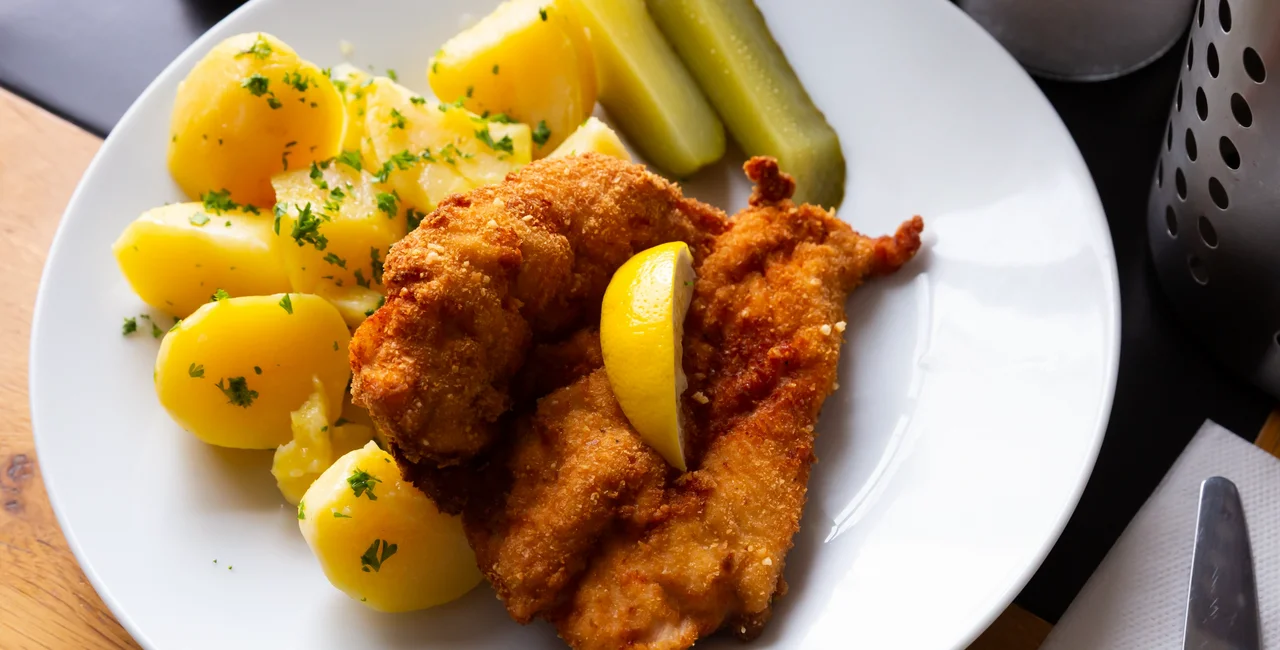

 Summary for: From Vienna to Prague: How schnitzel (řízek) became a Czech comfort food
Golden, crispy and usually occupying a suspiciously large portion of the plate, řízek is one of those foods that feels unmistakably Czech. You'll find it in pubs, school cafeterias and family kitchens, served alongside potatoes or a generous scoop of potato salad.
But řízek's history stretches far beyond the Czech lands. Its family tree reaches through Vienna to northern Italy, and, according to one enduring culinary legend, involves a Bohemian-born field marshal whose monument is currently making headlines in Prague.
For International Schnitzel Day on Sept. 9, our team headed to Řízek od Babičky in Prague's Karlín neighborhood to pay tribute to one of Czechia's favorite comfort foods:
How Wiener Schnitzel became Czech řízek
The classic Wiener Schnitzel is made from a thin piece of veal coated in flour, egg and breadcrumbs before being fried until its coating turns golden and crisp. In Czechia, the same basic technique became smažený řízek, though pork and later chicken became far more commonplace than expensive veal.
The origins of schnitzel are less clear. One famous story credits Field Marshal Joseph Radetzky of Radetz (Radče), the Bohemian-born Habsburg commander, for bringing the dish to central Europe.
According to the tale, Radetzky encountered Milan's cotoletta alla milanese while serving in northern Italy and helped introduce the breaded cutlet to imperial Vienna.
It's a great story, but almost certainly not the origin of Wiener Schnitzel. Austria's official tourism authority notes that the first known reference to Wiener Schnitzel in Austrian cuisine dates to 1831, decades before Radetzky supposedly brought the recipe from Italy.

What is clear is that breaded cutlets became a fixture of the shared culinary world of the Habsburg Empire. As the dish spread, regional variations developed, and in the Czech lands řízek eventually became as much a part of local cooking as it was of Austrian cuisine.
Radetzky, meanwhile, is back in Prague's headlines for an entirely different reason. City councilors voted this summer to return his 19th-century monument to Malostranské náměstí, more than a century after it was removed following the creation of Czechoslovakia.
What makes a řízek Czech?
If Vienna claims Wiener Schnitzel, Czechia has certainly made řízek its own. Veal remains essential if you want the genuine Viennese version, but Czech řízek is commonly made from pork or chicken. The meat is pounded thin, passed through the familiar trojobal (flour, beaten egg and breadcrumbs) and fried.
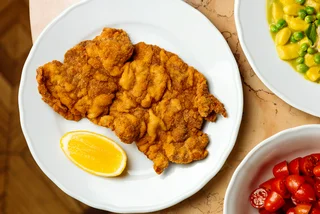
Then come the accompaniments. Potato salad is a classic, particularly for festive meals, while boiled potatoes, mashed potatoes, pickles and a wedge of lemon are also common partners. But perhaps the most characteristically Czech řízek isn't eaten fresh from the fryer at all.
Cold řízky wrapped up for the journey are a fixture of Czech trips and excursions, whether packed for a train ride, a day of hiking or a long drive to the seaside. Few foods travel quite so well, and generations of Czech families have discovered that yesterday's fried cutlet tastes surprisingly good straight from a backpack.

That helps explain why calling řízek simply the "Czech version of schnitzel" doesn't quite capture its place in local culture. Like many foods shared across the former Habsburg lands, its precise nationality is difficult to pin down. But Czechia has certainly developed its own traditions around it.
And if you've somehow yet to try a Czech řízek, International Schnitzel Day offers as good an excuse as any.