



 Reading time: 4 minutes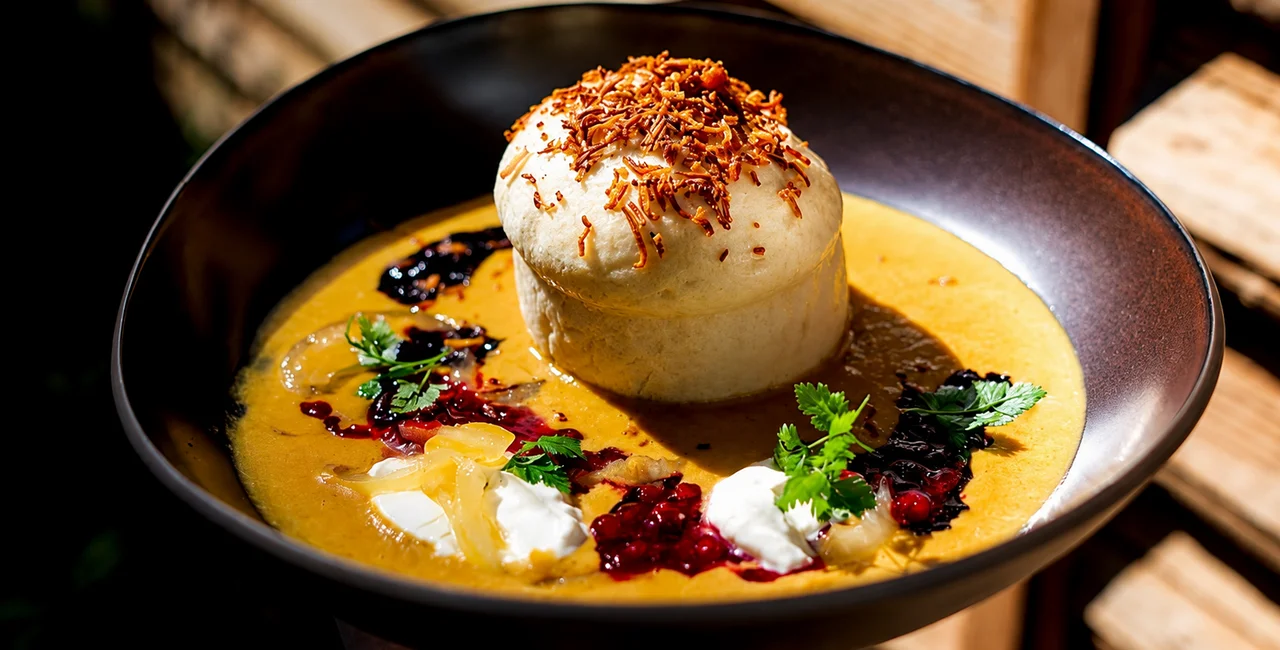

 Summary for: Czechs have their own way of cooking. These 7 specialties prove it
No one would confuse Czech cuisine with healthy eating, but they’d certainly find plenty to celebrate in this melting pot of Bohemian, Moravian, Austrian, Bavarian, and Slovak traditions. Whether sweet or savory, local dishes slather the palate with rich gravies, earthy herbs, succulent meats, aromatic cheeses, and zesty berries.
Its beer is well known, but unfortunately, few Czech dishes, cooking techniques, and preparation styles cross the seven seas to find fame abroad. It's good news for culinary treasure hunters, as there’s plenty of gold to mine at Prague restaurants like Červený Jelen. Among the nuggets are dishes hard to find outside of Czechia, so we asked Marek Fichtner, executive chef at Červený Jelen, to share some of his homegrown favorites.
Svíčková (beef in cream sauce)
“One of our national dishes is svíčková, which is a kind of creamy vegetable sauce,” Fichtner shares. This tenderloin slab of beef enveloped in a root-vegetable gravy has been a staple of Bohemian cookbooks since the early 1800s. Like goulash, it typically comes with bread dumplings but infuses heavy cream in the sauce, often under a dollop of unsweetened whipped cream. Lingonberries, cranberries, or juniper berries also regularly appear.
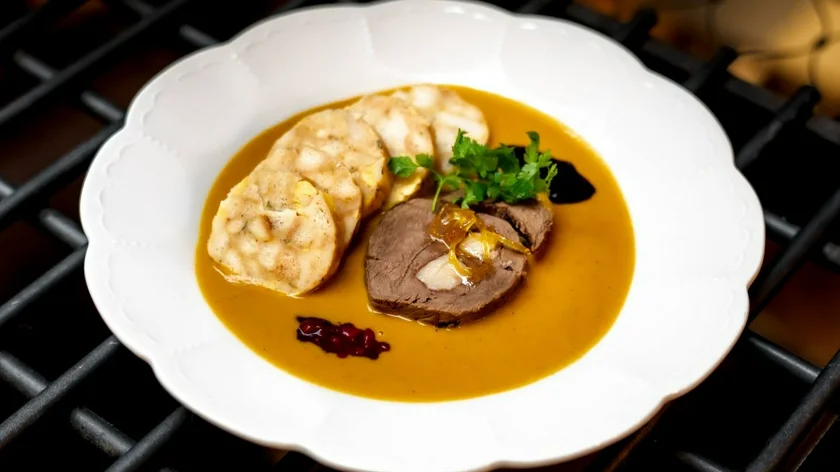
While his mother cooked the sirloin in a pressure cooker, Fichtner takes a slow-cook approach at Červený Jelen, preparing the restaurant's svíčková "overnight at a low temperature.”
Knedlíky (dumplings)
Just about every part of the world has some form of dumpling, be it the potstickers of China, mantı of Turkey, gujiya of India, empanadas of Argentina, or kartoffelklöße of Germany. But compared to the rest, české knedlíky are pillowy carbohydrate all its own.
“Our potato dumpling is different from the German one,” explains Fichtner. “That is mainly half-cooked potato and half-raw potato, mixed together and boiled. Our potato dumpling is made only with boiled potatoes, and you slice it.”
Also made with bread, knedlíky serve as excellent sponges to sop up gravy in goulash and svíčková, but they also feature in sweet dishes, especially ovocné knedlíky, where they combine with plums, apricots, strawberries, or blueberries, then are sprinkled with sugar or cinnamon, or topped with grated tvaroh.
Koprová omáčka (dill sauce with egg and potatoes)
This classic Czech dish is a white wedding of boiled eggs, cream sauce, and bread dumplings or boiled potatoes. This being Czech cuisine, meat is still in the mix, literally, as beef broth blends with roux, milk, and heavy cream to create the sauce. But it’s dill that distinguishes the flavor and should be fresh, not pickled, says Fichtner.
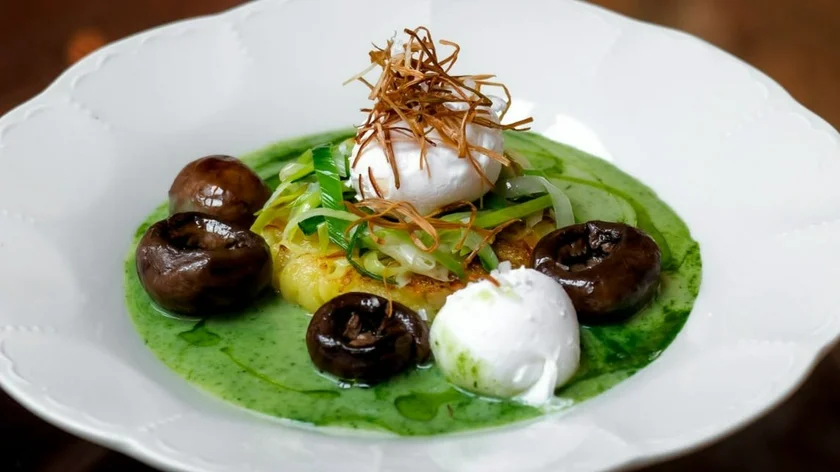
When Červený Jelen serves the dish, Fichtner makes a few other changes. “We use an egg cooked at 63°C, so it is like a poached egg, with the yolk still soft.” He also serves it with potato rösti instead of boiled potatoes. “In the end, it is the same three components, just cooked a little differently and properly.”
Smaženice (mushroom casserole)
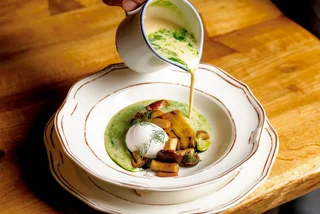
In Czechia, the breakfast of champions (or champignons), includes this classic scramble of eggs, mushrooms, onions, pepper, and caraway seeds. It’s also a pathway into the Bohemian soul, as mushroom foraging has long been called the real national sport of the country. As such, this dish may include fresh, edible mushrooms common to Czech forests, including porcini, parasol, bolete, and chanterelles.
Fichtner considers this to be an anytime dish. “You don’t have smaženice only for breakfast. You can have it for dinner,” he shares. The chef grew up on the dish and feels the preparation is as important as the ingredients. “The mushrooms release water, so you cover and braise them a little. Then, take off the cover, let the liquid evaporate, and add eggs.”
Smažené jídlo (fried foods)
Anyone studying and eating Czech cuisine will quickly meet the word smažený and understand that fried food in this country goes beyond greasy side dishes and oversaturated snacks. Czech chefs embrace the frying pan, where fried foods are served as a perfectly acceptable main course, whether through smažený sýr (fried cheese), smažený řízek (schnitzel), or smažený kapr (fried carp).
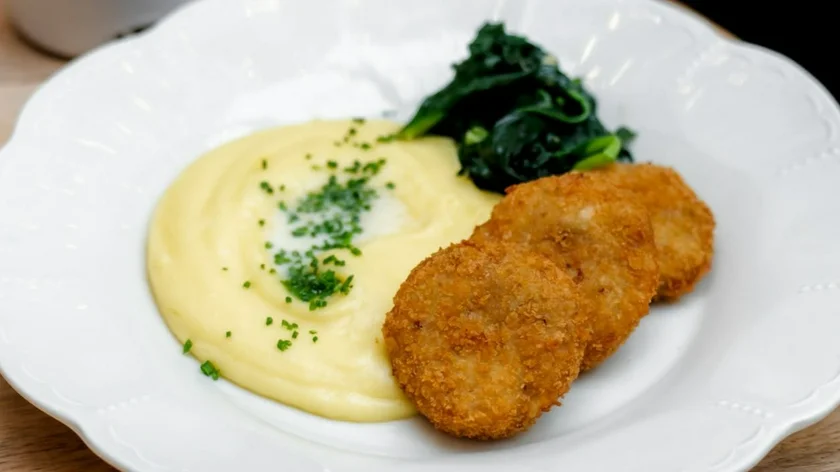
However, Fichtner steers people toward mushrooms yet again in smažené houby, or mushroom schnitzel. “You take the cap of the mushroom and fry it with flour, egg, and breadcrumbs,” he explains. Fried cauliflower, or smažený květák, is also a good option, and both are typically served with tartar sauce.
Polévky (soups, soups, and more soups)
“We are a soup nation,” Fichtner declares with pride. “Whether it’s Monday, the weekend, or any other day, there is always soup on the table.” Soup also marks the starting point of his cooking career, as it featured much more prominently in the cookbooks he learned from.
In Czechia, Fichtner encourages foodies to try a few favorites. “Bramboračka is a very rich potato soup you could compare to chowder,” he highlights. Two others are zelňačka, a soup made from sauerkraut, and kulajda, a creamy dill soup.
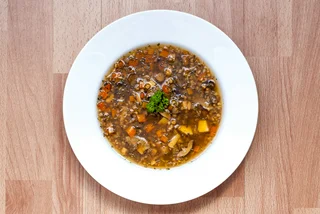
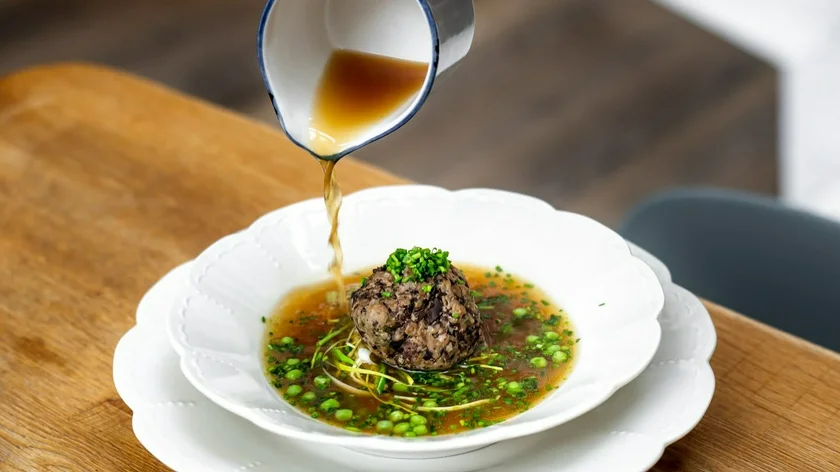
For a true Czech experience, look for soups with liver dumplings, known as játrové knedlíčky. Attend a Czech wedding, and you’ll find them in hovězí vývar s játrovými knedlíčky, or “wedding soup,” made of beef broth, liver dumplings, root vegetables, and fresh parsley.
It’s easy to fall into stereotypes in Czech cuisine, especially as many “traditional,” tourist-facing restaurants in Prague seem to sling the same few dishes. But step a bit further into local kitchens, and you’ll find much more diversity, creativity, and ingenuity, as chefs like Fichtner fuse the old and the new in dynamic and delicious ways.