




 Reading time: 2 minutes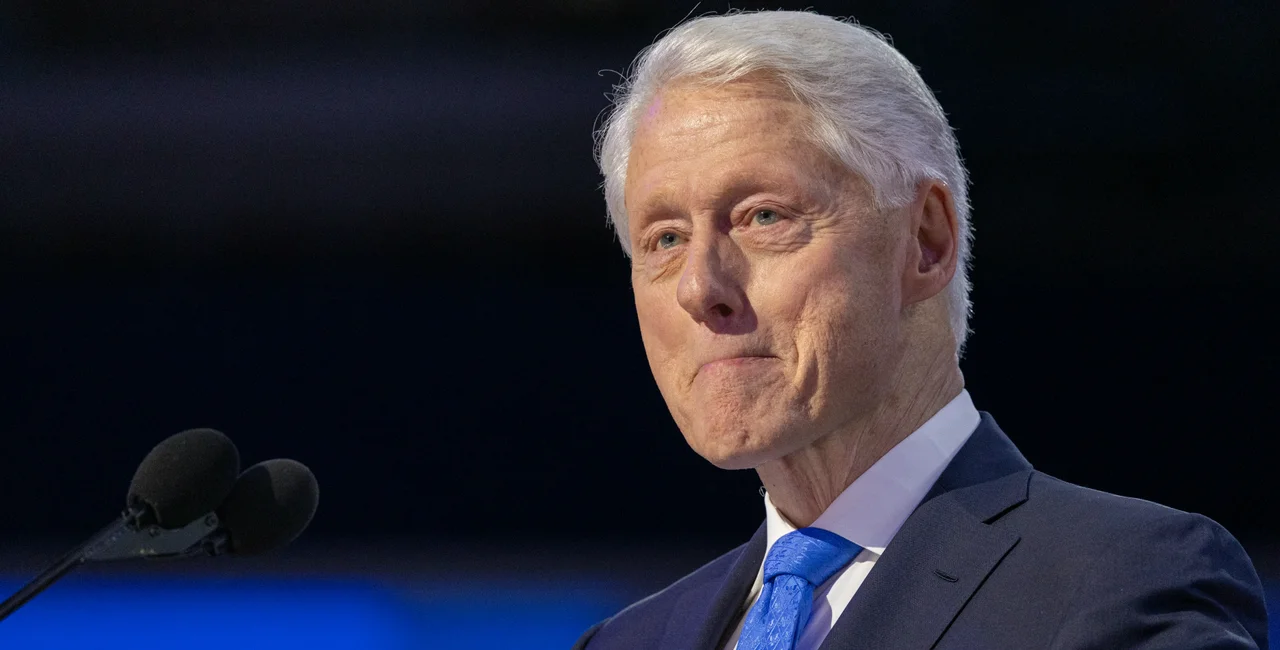

 Summary for: Bill Clinton pays saxophone tribute to Havel on 90th birthday
Former U.S. President Bill Clinton has paid tribute to Václav Havel on the 90th anniversary of the Czech statesman’s birth, remembering him as an exceptional political leader and close personal friend who retained his humor despite serious health problems.
In an interview with Czech Radio, Clinton said Havel understood that democracy could move backward as well as forward, but never lost faith in the principles underpinning it.
Clinton also recorded a more personal tribute, playing “Happy Birthday” on the saxophone in a video produced for Czech Radio.
‘We have to trust freedom’
Clinton described Havel as one of the most interesting people he had encountered during his political career. The playwright, dissident and former president always seemed to know what to say and when to say it, he recalled.
“I think on his 90th birthday, people should remember that Havel never claimed to have all the answers, but he knew how things should be done,” Clinton said.
His strongest memories involved their private conversations, during which Havel repeatedly emphasized the need to trust democratic institutions even when voters made decisions with which political leaders disagreed.
“Things will go backward as well as forward,” Clinton recalled Havel saying. “But if people are free, truly free in a system which favors both majority rule and minority rights and which preserves individual liberties, things will work out in the end.”

Clinton said Havel was not discouraged by political setbacks and instead continued pursuing his goals gradually.
One issue on which the two initially differed was the speed of Czechia’s accession to NATO. Havel pushed for the country to join sooner, while Clinton’s administration adopted a more cautious approach. Czechia ultimately entered the alliance alongside Poland and Hungary in 1999.

Friendship outlasted their presidencies
Clinton served as U.S. president from 1993 to 2001, overlapping with most of Havel’s tenure as the first president of the independent Czech Republic.
Their relationship became one of the most visible Czech-American political friendships of the post-communist era. Clinton’s 1994 visit to Prague included an appearance at the Reduta Jazz Club, where he played the saxophone, and an informal visit with Havel to the U Zlatého tygra pub.
Clinton said Havel had a talent for making people laugh. Even as his health deteriorated, the former Czech president remained grateful for each new day, he recalled.

The two last met in New York in 2010. Clinton said they discussed developments in Czechia and looked back on the peaceful division of Czechoslovakia, which Havel had come to regard as the correct outcome.
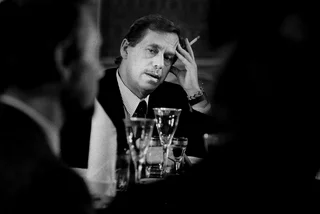
“I don’t know that I enjoyed being with anybody in politics any more than him,” Clinton said. “He and I were friends.”
Havel died at his country home in Hrádeček in December 2011 at the age of 75.
Clinton said Havel would likely view the current rise of authoritarianism and efforts by countries to isolate themselves as dangerous developments. Despite democracy’s imperfections, Clinton said, Havel remained convinced that preserving freedom of speech, thought and movement would ultimately allow societies to correct their mistakes.