



 Reading time: 7 minutes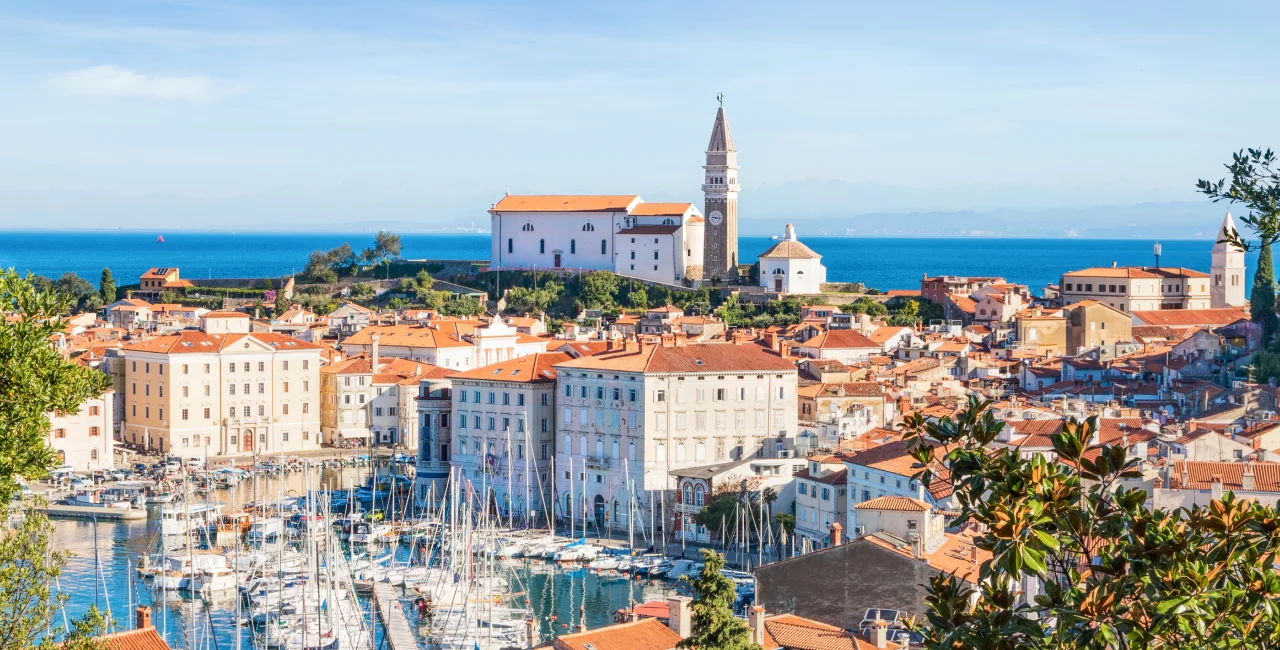

 Summary for: 7 easy beach escapes you can reach by train or bus from Prague
As Bohemians have long bemoaned, the downside of a Central European homeland is the seaside dearth. The landlocked lament rises with the mercury in the summer months and the start of holiday season, when a simple escape to cool waters feels increasingly essential.
The good news is that the sea is not as far away as it seems, and flying is no longer the default answer. With airfares fluctuating and airport travel often more hassle than it’s worth for short trips, Prague sits at the center of a well-developed network of international trains and long-distance buses that reach beaches on the Baltic and Adriatic in under a day, with Alpine lakes along the way.
This summer, stay cool and grounded at these seven no-fly beach spots you can reach directly from Prague.
seaside escapes
Flensburg, Germany
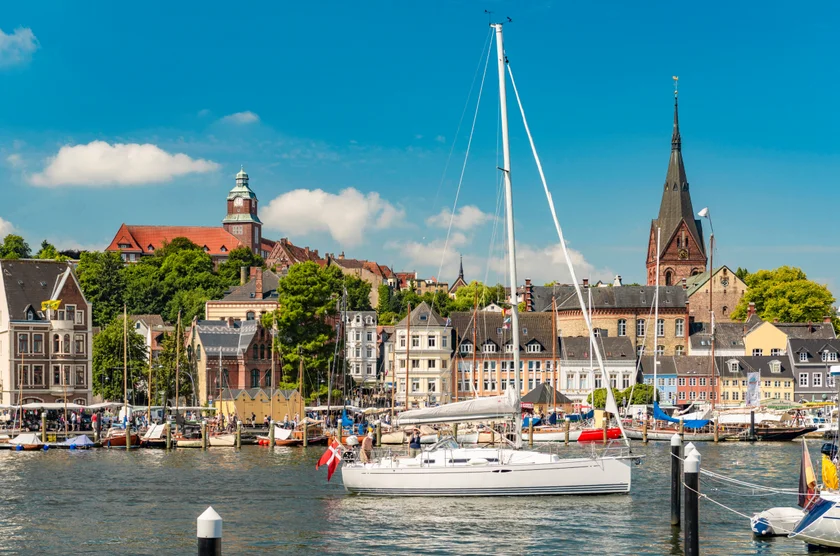
At the junction of Germany and Denmark sits the Flensburg Fjord, the westernmost point of the Baltic Sea. Wrapping the inner tip is the port city of Flensburg, founded in the 13th century and long coveted by passing empires for its naval attributes.
Today it’s home to 90,000 inhabitants and boasts an old town that escaped the 20th century mostly intact. Historical highlights include the Rote Strasse, with its cobbled 16th-century courtyards; historic port and maritime museum; and rum houses of Rum and Sugar Mile that reflect the city’s trading heyday.
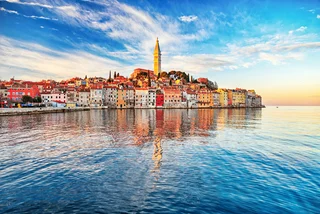

Follow the fjord northward along both shorelines to find numerous beaches, including the public Ostseebad, Solitüde and Lido Wassersleben, as well as private resorts with their own patch of sand. Seaside activities abound in the summer, with kitesurfing and sailing in particular thriving among the high winds.
Getting there:
Trains run daily from Prague, taking about 10 hours and 2-3 transfers. Multiple Flixbuses run per day between Prague and Flensburg, taking 11-14 hours depending on traffic and transfers.
Gdansk and Sopot
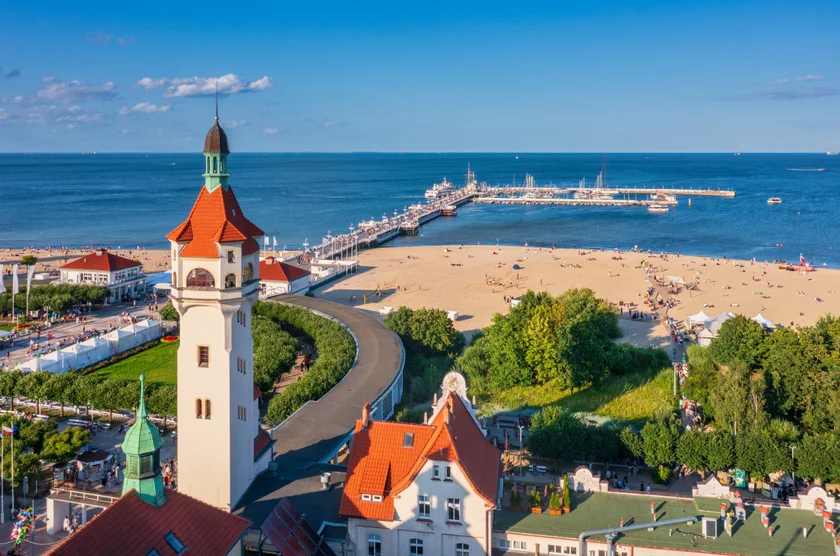
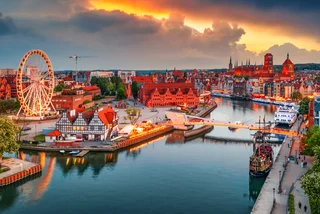
Modern Gdańsk is a brick-accented mix of shops, restaurants, boutique hotels, and historic sites tucked into meticulously restored facades that nod to both its maritime and medieval roots.
The city’s Hanseatic past still echoes in the Flemish, German, and Dutch merchant quarters and medieval lanes lining the river. The bronze statue of Neptune, cast in 1615, stands as a symbol of the city’s resilience and connection to the sea. The scenic coastline proves the point with a line of sandy beaches, including Blue Flag-certified ones like Stogi and Sobieszewo, that stretch in both directions from the port.

To the north, they reach Sopot, home to historic luxury resorts like Sofitel Grand Sopot and Sheraton Sopot Hotel.
Getting there:
The Baltic Express runs multiple trains daily from Prague, reaching Gdansk in about 8.5 hours. Direct buses go daily from Prague on Flixbus, taking about 12 hours.
Rijeka, Croatia
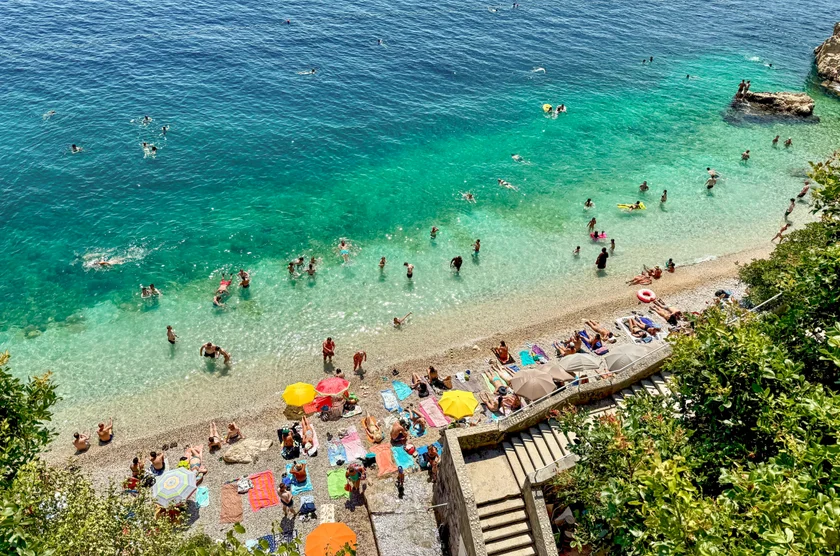
Long a favorite seaside getaway for Czechs, the Croatian coast continues to draw large numbers annually, even as countries like Greece, Spain, and Turkey gain more of the Czech market. Buses carry the annual summer flock to the Dalmatian Coast, with the first stop in Rijeka.
Most travelers don’t stay long, exchanging the urban grit of Croatia’s third-largest city for the Game-of-Thrones splendor of towns like Crikvenica, Trogir, and Šibenik. That leaves Rijeka and its beaches much freer of mass tourist traffic. And it hosts excellent ones, too, two of which, Ploče and Kostanj, carry Blue Flag status.
Bookend the beach days with culture and cuisine, including Trsat Castle and Michelin-ranked restaurants. The city also serves as a gateway to Istria in the west, Dalmatia to the south, and Krk and Cres islands just offshore.
Getting there:
For many travelers, the overnight train is the most comfortable way to reach Croatia without flying, while long-distance buses often provide the widest choice of routes and departure times. Journey times are broadly similar, around 12 to 16 hours for trains and 12.5 to 17 hours for buses, depending on the destination and connections.
Piran and Izola, Slovenia
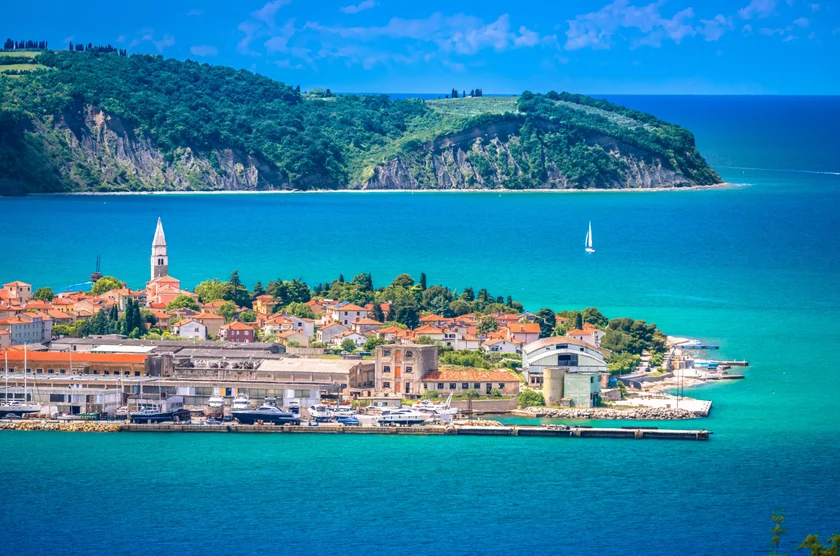
At just 46.6 kilometers long, the Slovenian coast is easy to overlook, especially with the glittering options in Croatia just beyond. But Slovenia’s Adriatic shores include plenty of gems that can dazzle for days. Its sweetest stretch of beach runs along the base of an 80-meter-high cliff at Mesečev Zaliv (Moon Bay).

Part of Strunjan Nature Park, the bay sits between the towns of Piran and Izola, each of which makes a great home base. Piran, to the west, gets the spotlight, with its endlessly explorable Venetian Gothic old town and historic walls that date back to the 7th century.
Izola, a working fishing village to the east, offers a more slow-travel, nature focus that invites long reads on the beach and intimate dining on the catch of the day.
Getting there:
FlixBus operates regular direct services from Prague to Koper, Slovenia, as well as Portorož during the summer season (subject to timetable changes). From Koper, frequent local buses connect to Izola (around 8 km away) and Piran (around 18 km away). If travelling to Portorož, Piran is just a few kilometres away and easily reached by local bus, shuttle or taxi.
Copenhagen
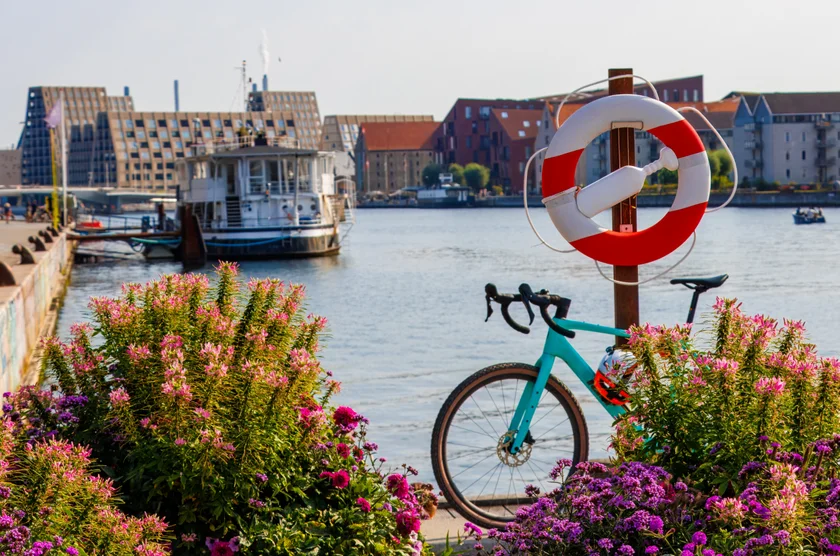
Copenhagen has long owed its identity to the sea, shaped by centuries of maritime trade, naval ambition, and harbor expansion that tied the city tightly to the Baltic and North Sea routes.

Today, that same waterfront has been reworked into one of Europe’s most accessible urban swimming landscapes, where former industrial quays and modern harbor developments now double as clean, designated bathing zones.
In summer, residents and visitors drift between a network of harbor baths and sandy city beaches, with favorites including Islands Brygge and the architecturally striking Kalvebod Bølge, alongside longer coastal stretches at Amager Strandpark, where dunes, boardwalks, and shallow waters create a more traditional seaside feel.
Getting there:
Direct overnight trains run from Prague to Copenhagen via Germany, typically with one or two transfers along the route, most often in Hamburg or Berlin depending on the connection. Journey times are usually around 12–14 hours, making it a viable overnight option for reaching the Danish coast without flying.
Inland lakes worth exploring
Zurich, Switzerland
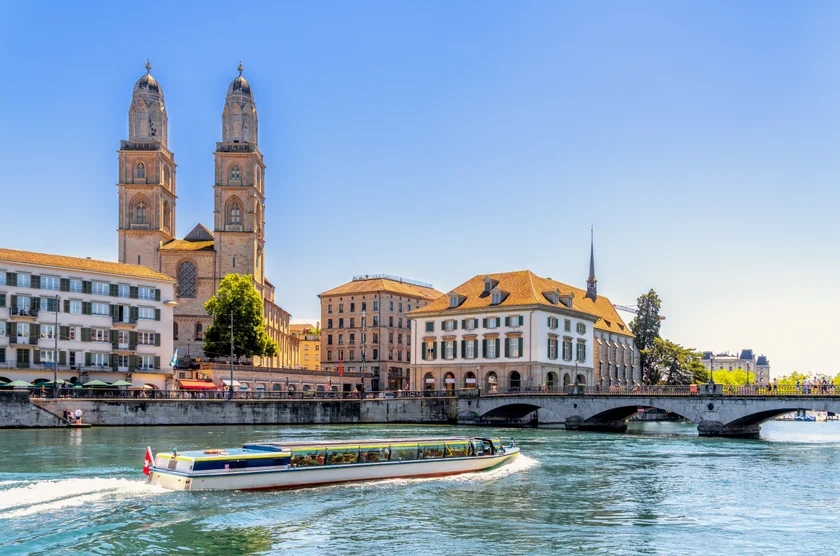
If water purity ranks high on seaside preferences, then set the compass southwest to Switzerland, where water is so clean that it’s drinkable from most public fountains, and even the rivers and lakes themselves.
Zürichsee, aka Lake Zurich, holds 88 square kilometers of this clean, fresh water in its crescent shape. In summer, the Swiss capital takes full advantage with all manner of watersports, including swimming, diving, sailing, paddleboarding, and rowing.
Circumnavigating the shoreline over 130 km is the Lake Zurich Circular Trail, which passes through historical towns and villages, woodlands, viewpoints, recreation areas, restaurants, wineries, and more.
Best of all, when the sweat starts dripping, a cooling dip is steps away. Once submerged, you may feel the waves pull you to Zurich itself. There, you can bathe in the art, culture and history, from the stained glass windows by Marc Chagall in Fraumünster church and world’s largest Dada collection at Kunsthaus Zürich to the culinary pleasures of the Fondue Tram and Lindt Home of Chocolate.
Getting there:
Getting there: Czech Railways operates a direct overnight train from Prague to Zurich, departing in the early evening (around 6:30 p.m.) and arriving the following morning at approximately 9 a.m. Sleeper and couchette accommodation is available, making it one of the most comfortable ways to travel. For those who prefer to travel by road, FlixBus operates multiple direct daily services, with journey times of around 11 hours.
Banská Štiavnica and Tajchy lakes – Slovakia
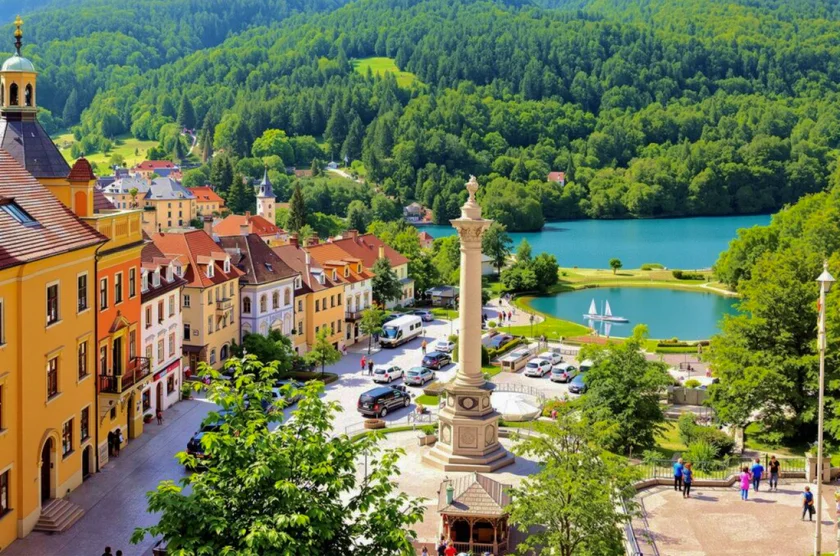
The silver mining that put Banská Štiavnica on the map in the 13th century also bequeathed dozens of purpose-built water reservoirs that now provide some of the most pristine swimming in Central Europe. In fact, the combination of history, industry and nature won the town and lakes UNESCO World Heritage status in 1993.
Swimmers and watersporters, in particular, get to indulge in the summer, with 24 lakes to choose from. Tourist favorites include Počúvadlo, Vindšachtské and Richňava, while those seeking seclusion may look to Halčiansky, Bakomi and Evička.
In between dips, explore sights in town, such as the hilltop “Cavalry,” 13th-century castle, and mining museum, reserving several hours to steep in the cafes and Romanesque burgher houses along Andreja Kmet’a Street.
Getting there:
Located in central Slovakia, Banská Štiavnica requires a hodgepodge of connections to reach with public transport. By train, Slovak Rail connects Prague with Kúpele Sliač, from which a bus runs the final 34 km to Banská Štiavnica.
Or take the direct train to Bratislava, Slovak Rail to Levice, and a bus from there. Flixbus reaches nearby towns of Banská Bystrica and Zvolen from Prague in about nine hours, from which locals buses reach Banská Štiavnica.