



 Reading time: 2 minutes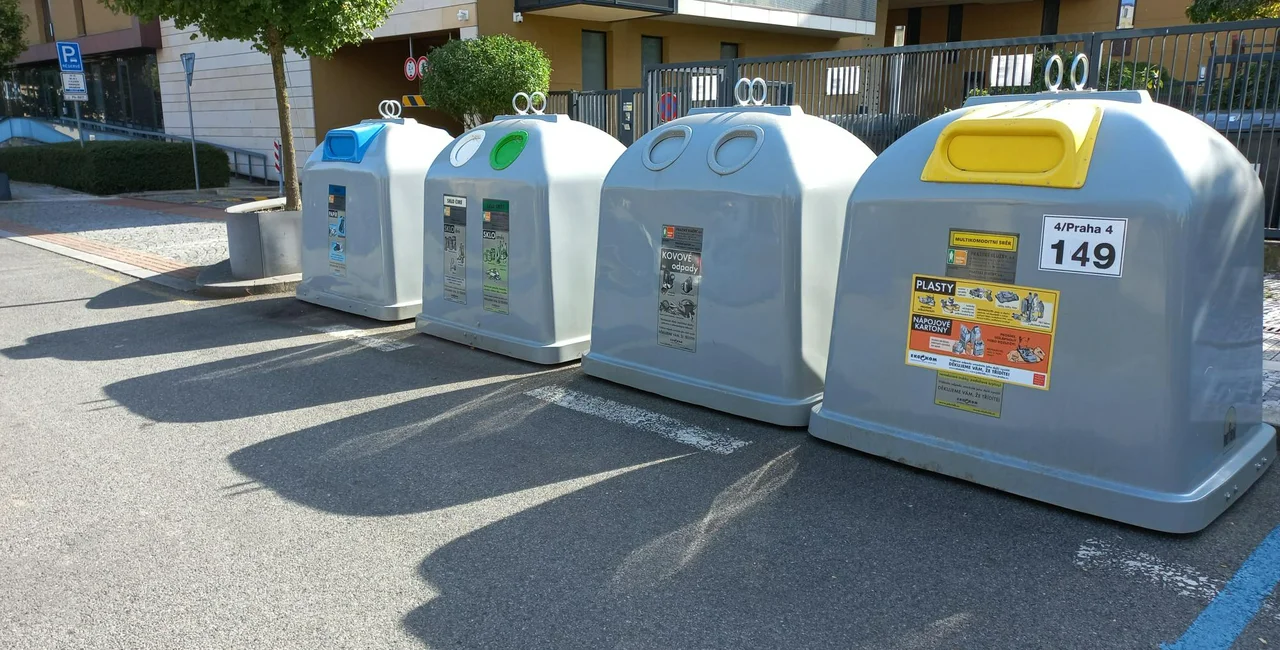

 Summary for: Prague’s smart glass bins cut collections by two-thirds, save millions
Prague is expanding a sensor-based glass collection system after a pilot project cut the number of waste pickups by almost two-thirds and saved the city CZK 2.88 million.
Rather than emptying glass containers on a fixed schedule, the system monitors how full each bin is and predicts when collection will actually be needed.
The 18-month pilot in Prague 11 ended July 31 and became part of the city’s regular waste service the following day. It has now been extended to another 78 glass containers in Prague 15.
Sensors stop trucks ‘collecting air’
The pilot began in February 2025 and gradually incorporated 199 slow-filling glass containers with bottom-emptying mechanisms. Each bin was fitted with a sensor measuring its fill level. The information was analyzed by a predictive algorithm connected to Prague’s Golemio municipal data platform.
If the system calculated that a bin would reach 90-percent capacity within the following eight days, it automatically sent a collection order to the waste company.
“Many containers were being emptied unnecessarily often because they were still half-empty,” Deputy Mayor Jana Komrsková said. “In other words, we were collecting air rather than waste.”

Some bins collected on the previous once-every-four-weeks schedule were only 5 to 10 percent full when emptied.

During the pilot, the system issued 1,200 collection orders. Following the original fixed schedule would have required approximately 3,400 trips over the same period.
Collections therefore fell to 35 percent of the previous total. Instead of being emptied every four weeks, the bins were collected on average every 10 to 12 weeks, reaching an average fill level of 84 percent.
City officials said the service remained reliable even during periods when glass waste increased sharply, including Christmas.
Savings exceed setup costs
The reduced collections saved CZK 2.88 million, while the one-time cost of preparing the project was CZK 800,000.
Fewer collection trips also mean less truck traffic, noise and emissions around recycling points, according to City Hall.
Prague 11 reported one practical drawback: depositing large pieces of flat glass could become more difficult when containers were relatively full. The district nevertheless recommended retaining the system at all participating locations and extending it to other suitable areas.


Under Prague’s new municipal waste contract, which took effect Aug. 1, dynamic collection is now a standard alternative to fixed pickup schedules for glass.
The system continues to monitor the original 199 bins in Prague 11 alongside the 78 newly added containers in Prague 15.
Officials will focus future expansion on slowly filling bottom-emptying glass bins, particularly those with strong seasonal fluctuations.
Prague is also considering using similar technology for metal recycling containers, which can fill unevenly throughout the year. The system could order additional pickups during busy periods while eliminating unnecessary collections when bins remain nearly empty.
City ICT councilor Daniel Mazur said the project had moved beyond the experimental stage.
“It shows how sensors, a data platform and the city’s everyday public services can be connected to deliver real savings and greater efficiency,” he said.