Pardubice’s new governing coalition has agreed to pursue the relocation of a Soviet soldier monument from náměstí Republiky, reopening a long-running debate over its place in the city center.
Deputy Mayor Petr Netolický said the intention was to move the sculpture rather than destroy it. Previous attempts to secure council approval for relocation have failed.
PARTNER ARTICLE
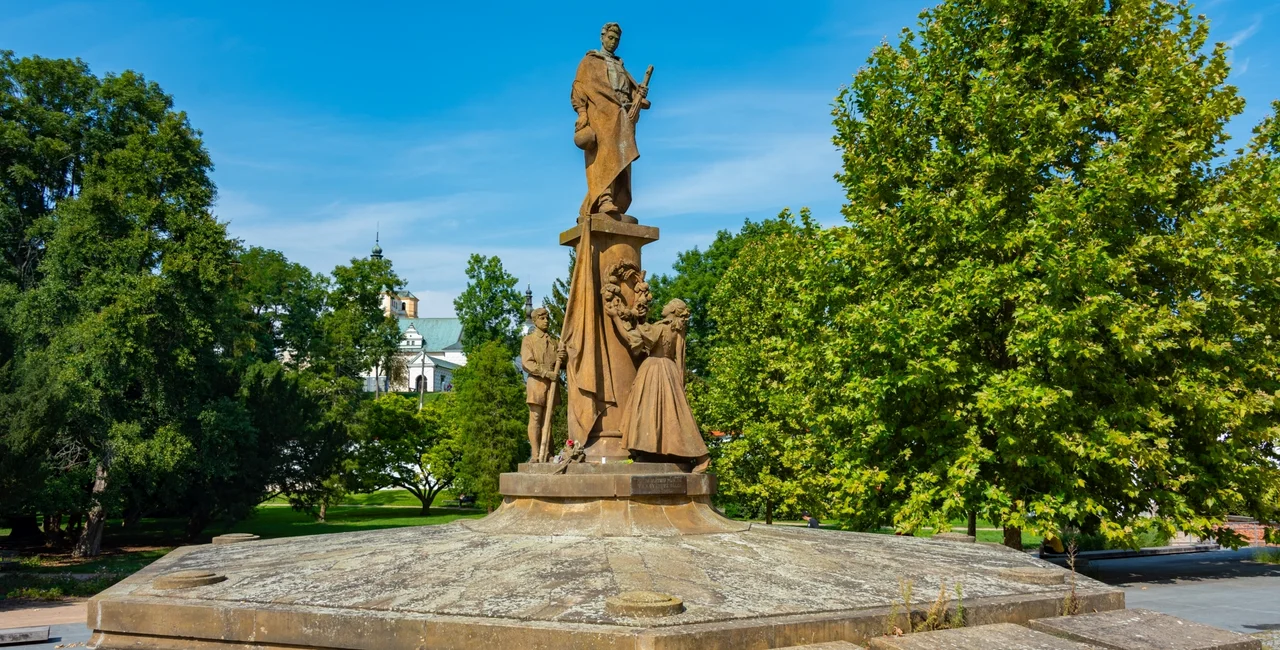
The Liberation Memorial, commonly known as the Red Army soldier sculpture, stands at the entrance to Tyršovy sady. Its origins lie in an early-1950s project that initially envisaged a statue of Soviet leader Joseph Stalin.
Museum storage remains a possible destination
Netolický, representing KDU-ČSL, said coalition partners had reached agreement on the intention to relocate the monument.
“Our intention is not to demolish or destroy the memorial, but to move it elsewhere,” he told reporters.
The announcement does not establish a removal date or confirm that the full city council has approved the move. Previous city leaders repeatedly discussed relocation but did not obtain sufficient support from councilors.
One potential destination has already been explored: a storage facility belonging to the East Bohemian Museum.
“It had been provisionally agreed that it could be placed in the East Bohemian Museum’s depository. As far as I know, that offer still stands,” Deputy Mayor Martin Slezák of Progresivní Pardubice said.
That option would take the sculpture out of its prominent public setting. The information released so far does not specify whether it would subsequently be displayed elsewhere.
A monument conceived for Stalin
Sculptor Josef Malejovský’s work was unveiled on Nov. 5, 1957, more than a decade after World War II ended.
The project had changed substantially before reaching that point.
Early plans called for Stalin to stand on the pedestal. A joint sculpture featuring Stalin and Czechoslovak communist leader Klement Gottwald was also considered.
After Soviet leader Nikita Khrushchev condemned Stalin’s personality cult in 1956, the design was revised. A Red Army soldier replaced Stalin as the central figure.
The completed group also includes a boy and girl from the communist-era Pioneer movement, alongside a woman in traditional dress carrying a harvest wreath.
Created in the socialist realist style, the memorial reflects the political circumstances in which it was commissioned. Its original ideological purpose remains one of the reasons its location is contested.
The debate therefore concerns a monument developed under communist rule in the 1950s, rather than one erected immediately after wartime liberation.
The coalition’s agreement gives relocation renewed political backing, but the next steps—including a final destination and timetable—have yet to be announced.